In short
- Psyllium husk is the outer seed coat of Plantago ovata: almost pure fibre that forms a gel in water.
- In UK medicines the same husk is called ispaghula husk.
- A 2022 review of 16 trials measured bowel frequency, stool consistency and straining.
- UK adults are advised to eat 30 g of fibre a day from their whole diet.
In this article
Psyllium husk is the outer coat of the seed of Plantago ovata. It is almost pure fibre, classed as soluble fibre, and absorbs water to form a gel, which is why it is also used in food, for example in gluten-free bread. 1 2
What part of the plant is psyllium husk?
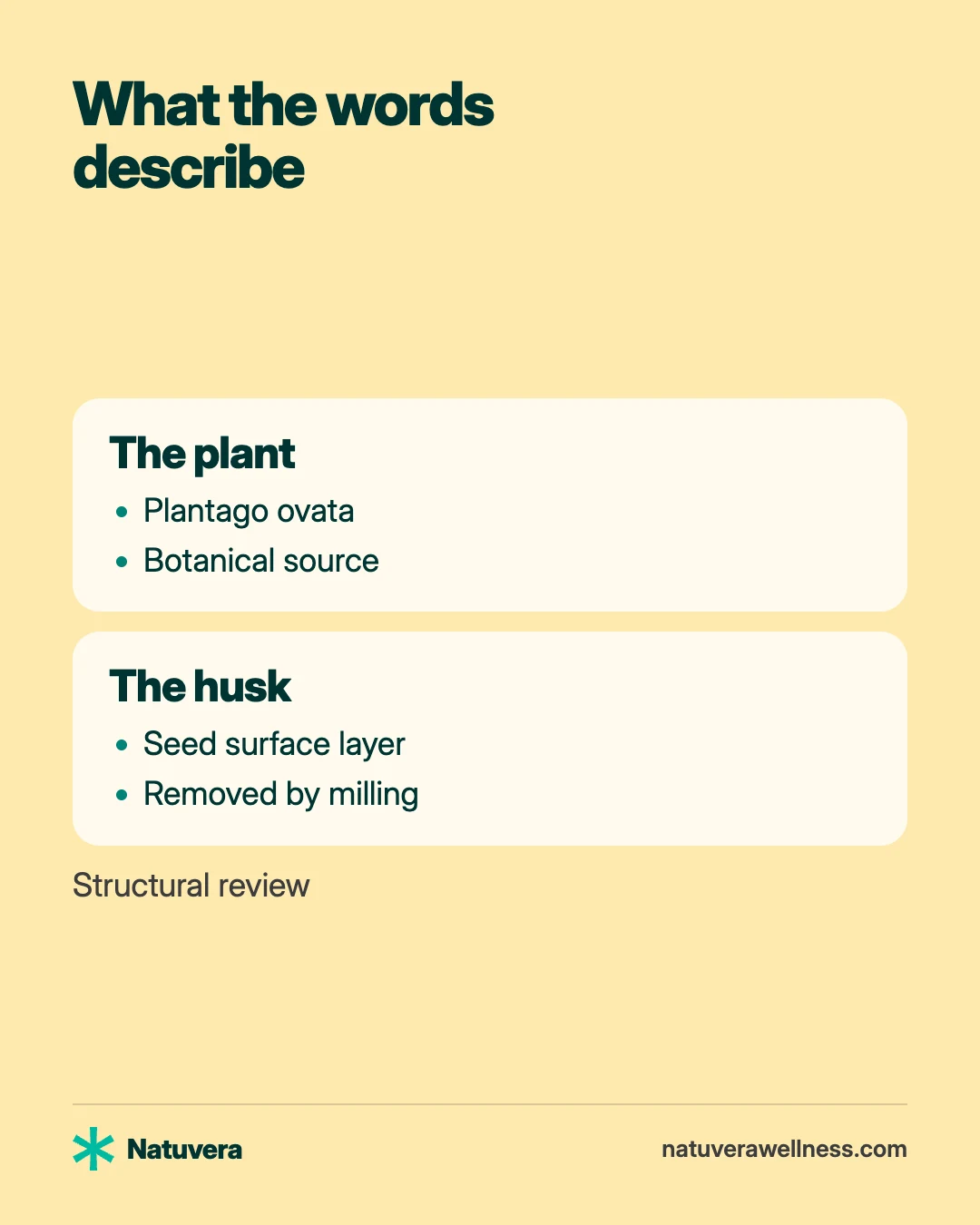
The husk is a layer on the seed surface, rather than the whole seed or the plant's leaves. A review of its structure describes removal by milling and its use as a food ingredient, including in baking. The words Plantago ovata identify the botanical source; the word husk identifies the part being described. 1
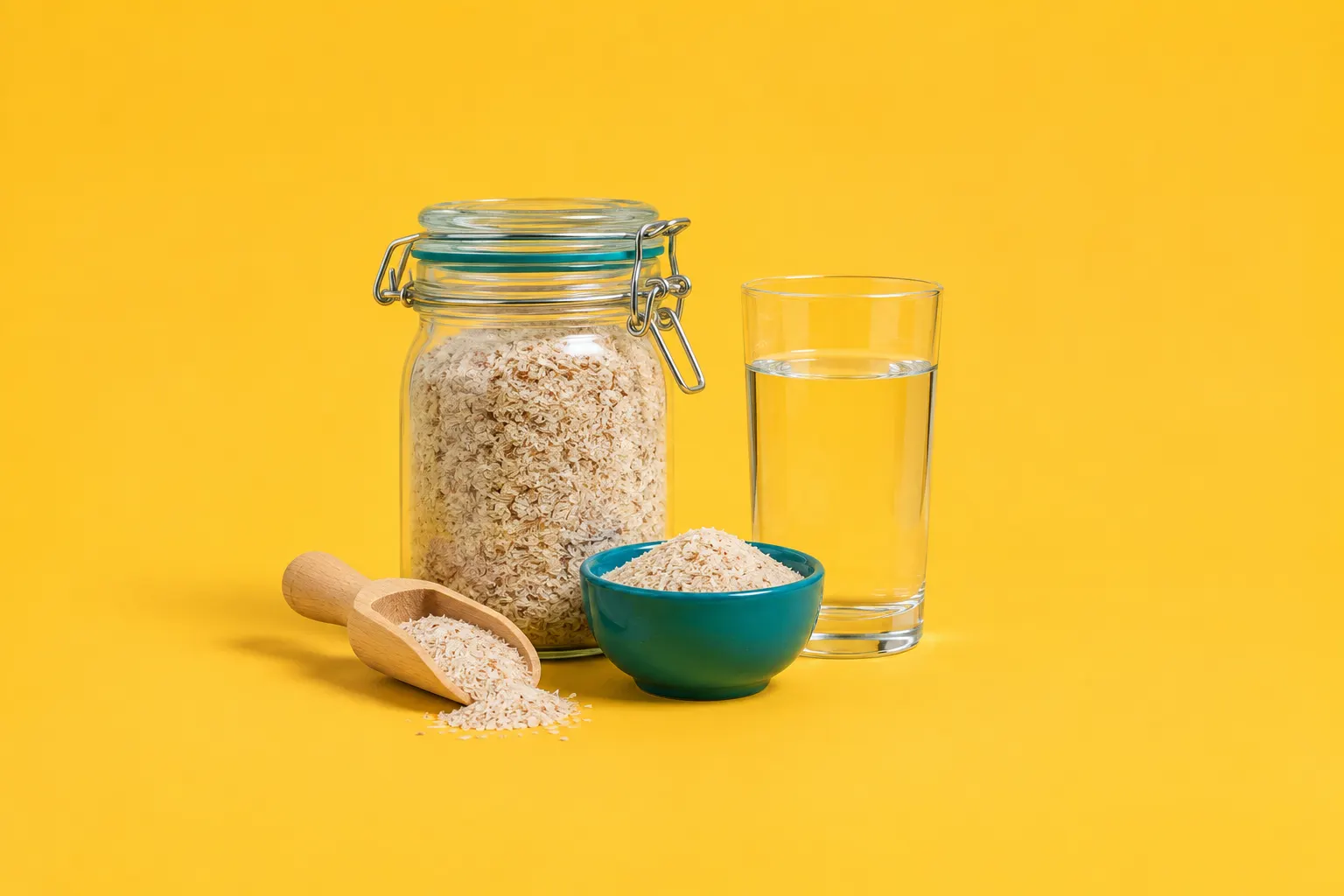
You may find it as whole husks or as a finely milled powder. Grinding changes the physical form, not the ingredient.
How is psyllium used in the UK?
Psyllium is used as a food ingredient: SACN lists it among extracted fibres sometimes added to products, and NHS hospital dietitians describe adding it to food. 3 4 In UK medicines the same husk, from Plantago ovata, is called ispaghula husk, and the NHS safety information for it is the main UK source on side effects. 5
What does the GB register say about benefits?
In Great Britain, a food can carry only the health claims listed as authorised on the GB nutrition and health claims register, and the register lists none for psyllium. So this guide describes what research on psyllium has measured, rather than making claims about it. 6
What have studies measured?
The largest recent summary is a 2022 systematic review of 16 randomised trials in 1,251 adults with chronic constipation, covering several fibre types, psyllium among them. It measured bowel movement frequency, stool consistency, straining and reported symptoms. The authors noted that the trials differed considerably and that none was at low risk of bias in every domain. 7
What is the UK advice about fibre in the diet?
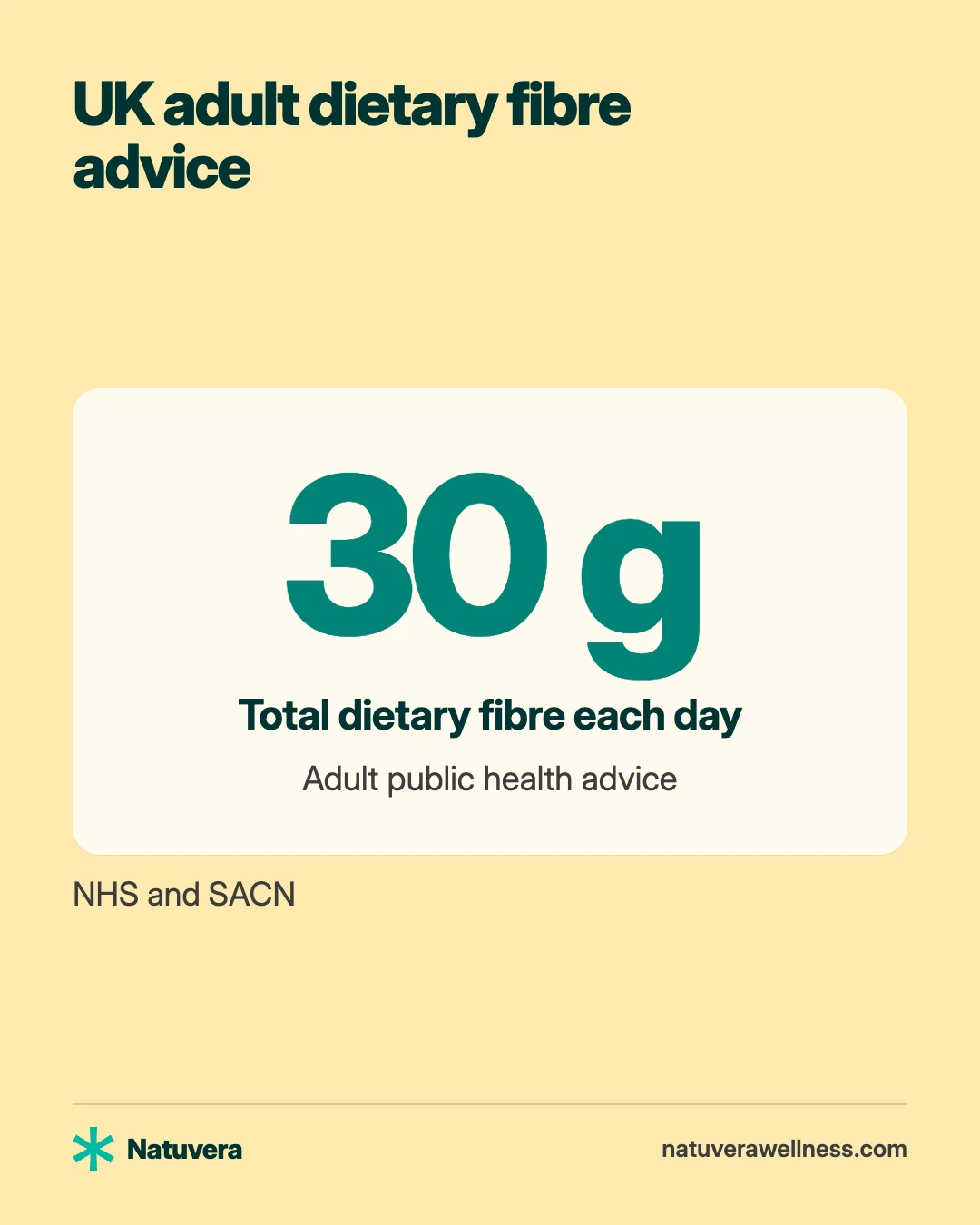
The NHS gives an adult dietary fibre target of 30 g a day as part of a balanced diet, and SACN sets the same adult reference value. This is the target for fibre from your whole diet; the NHS notes most adults eat about 20 g a day. 8 2
The NHS describes everyday food choices such as wholegrain bread and pasta, pulses, fruit, vegetables and potatoes with their skins. 8 For a full UK breakdown by age, read how much fibre you need a day. For examples of foods containing soluble fibre, see soluble fibre foods.
Is psyllium husk good for you personally?
Psyllium husk is almost pure fibre. Whether it suits you depends on your circumstances. The NHS's information on ispaghula husk identifies people who should check with a doctor or pharmacist first, including those with swallowing difficulties, possible bowel blockage or an unusual persistent change in bowel habits. 9
Speak to your GP or pharmacist if you have a medical condition, are pregnant or breastfeeding, or take medicines.
For the safety details, read psyllium husk side effects. If you have seen a warning label on a pack, psyllium husk cancer warning: what the label means explains what it is.
Common questions
What is psyllium husk made from?
It is the outer seed coating of Plantago ovata, milled off the seed surface.
What are the benefits of psyllium husk?
Psyllium husk is almost pure fibre that absorbs water and forms a gel. The GB register lists no health claim for it, so this guide covers what studies have measured.
Is psyllium husk good for you?
Psyllium husk is almost pure fibre. Whether it suits you depends on your circumstances: speak to your GP or pharmacist about medical conditions, pregnancy, breastfeeding or medicines.
General information about food and health, not medical advice. If you have symptoms or a medical condition, take any medicine or are pregnant, speak to your GP or pharmacist.
References
- Comprehensive Reviews in Food Science and Food Safety. Structural and Functional Properties of Fiber From Psyllium (Plantago ovata) Husk: Current Knowledge and Strategies to Expand Its Application in Food and Beyond. 2025. Read the source (accessed 12 November 2026).
- Scientific Advisory Committee on Nutrition. Carbohydrates and Health. 2015. Read the source (accessed 12 November 2026).
- Scientific Advisory Committee on Nutrition. SACN statement on expressing energy, fat and carbohydrate intakes and recommendations. 2025. Read the source (accessed 12 November 2026).
- University Hospitals Sussex NHS Foundation Trust. Constipation: dietary information. Not stated. Read the source (accessed 12 November 2026).
- Electronic Medicines Compendium. Ispaghula husk: UK summary of product characteristics. 2021. Read the source (accessed 12 November 2026).
- Department of Health and Social Care. Great Britain nutrition and health claims register. 2026. Read the source (accessed 12 November 2026).
- The American Journal of Clinical Nutrition. The Effect of Fiber Supplementation on Chronic Constipation in Adults: An Updated Systematic Review and Meta-Analysis of Randomized Controlled Trials. 2022. Read the source (accessed 12 November 2026).
- NHS. How to get more fibre into your diet. 2026. Read the source (accessed 12 November 2026).
- NHS. Ispaghula husk: who can and cannot take it. 2026. Read the source (accessed 12 November 2026).