In short
- Oats, barley, beans, lentils and some fruit and vegetables contain soluble fibre.
- Most foods contain a mixture of soluble and insoluble fibre.
- Total fibre figures should not be presented as soluble fibre amounts.
In this article
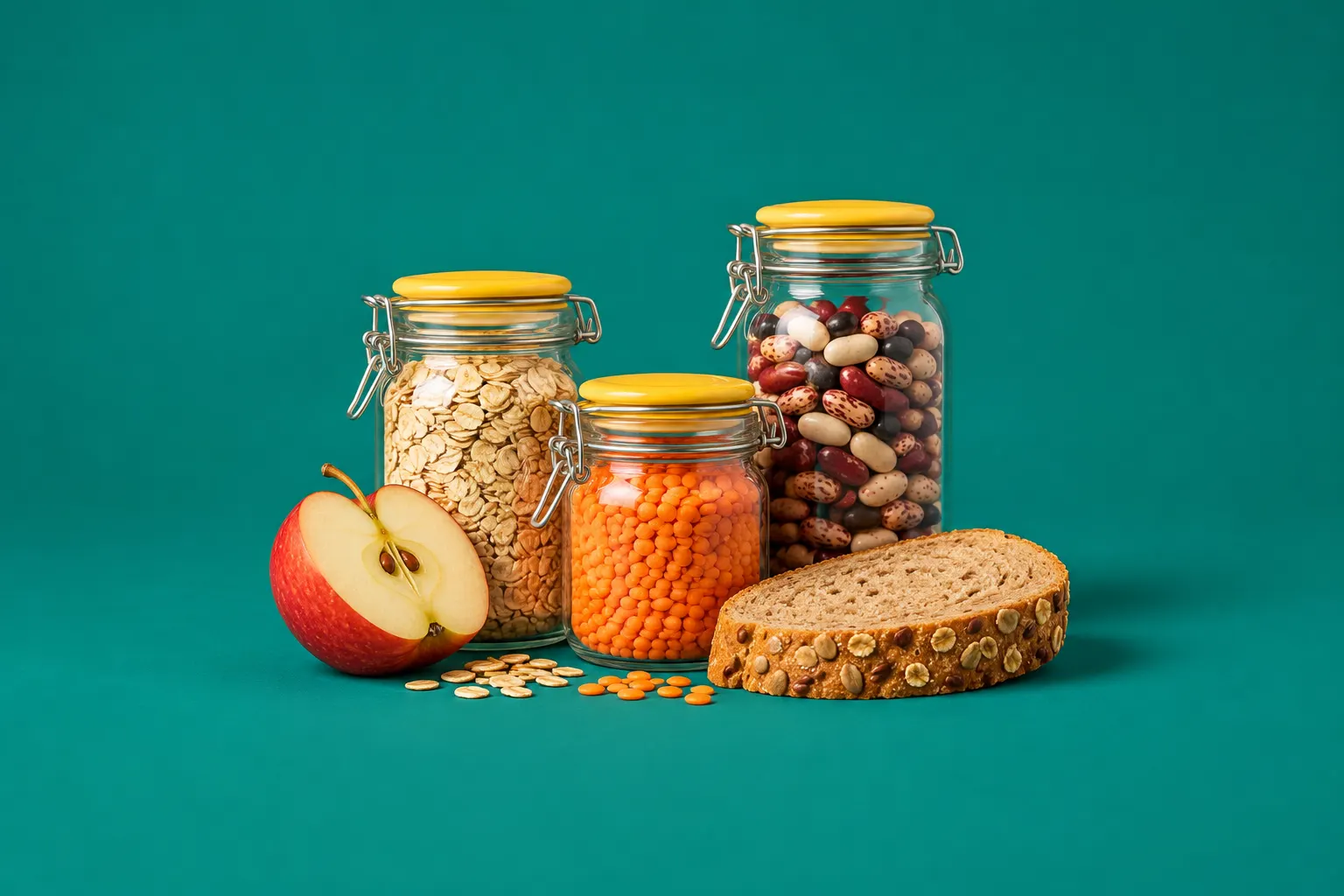
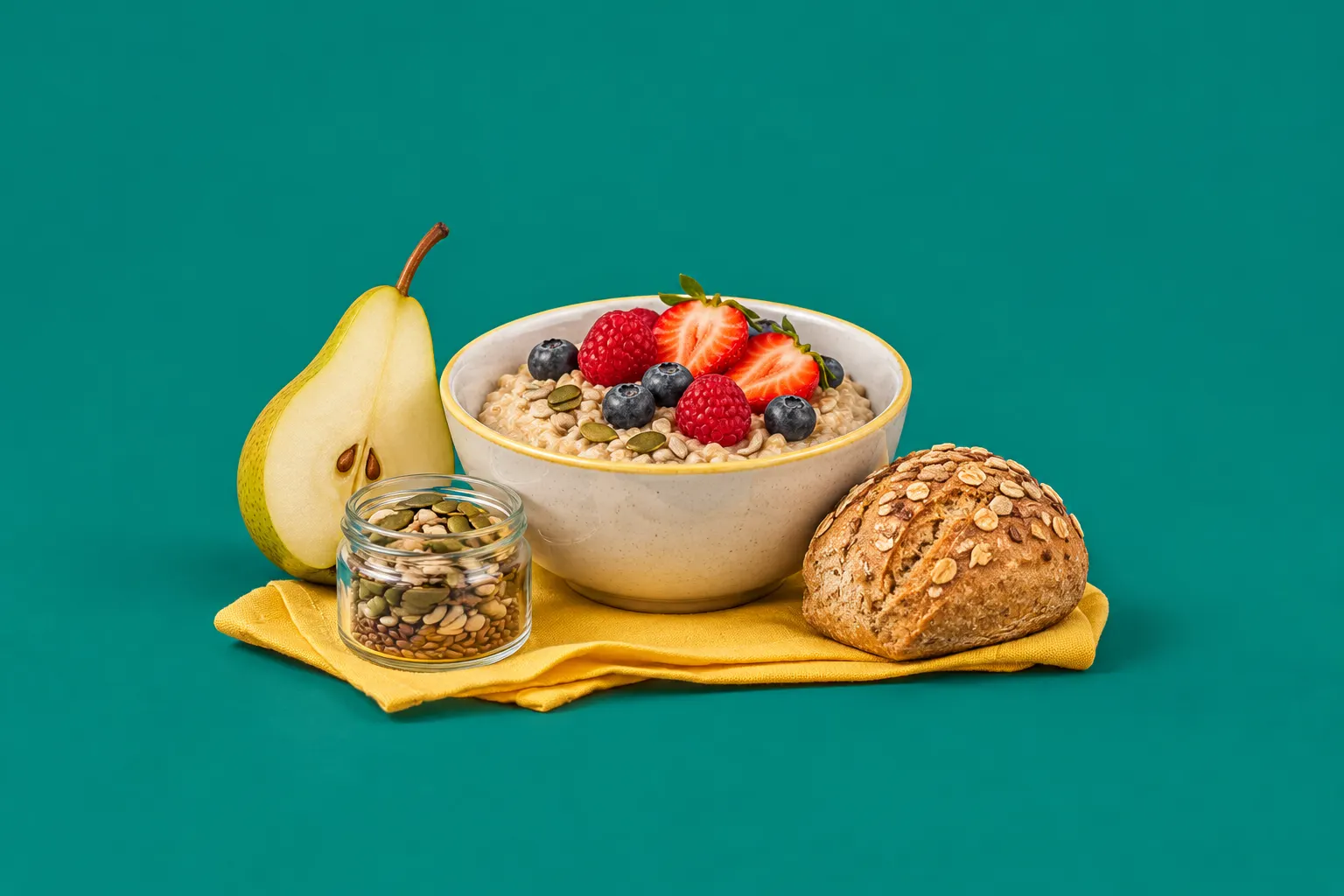
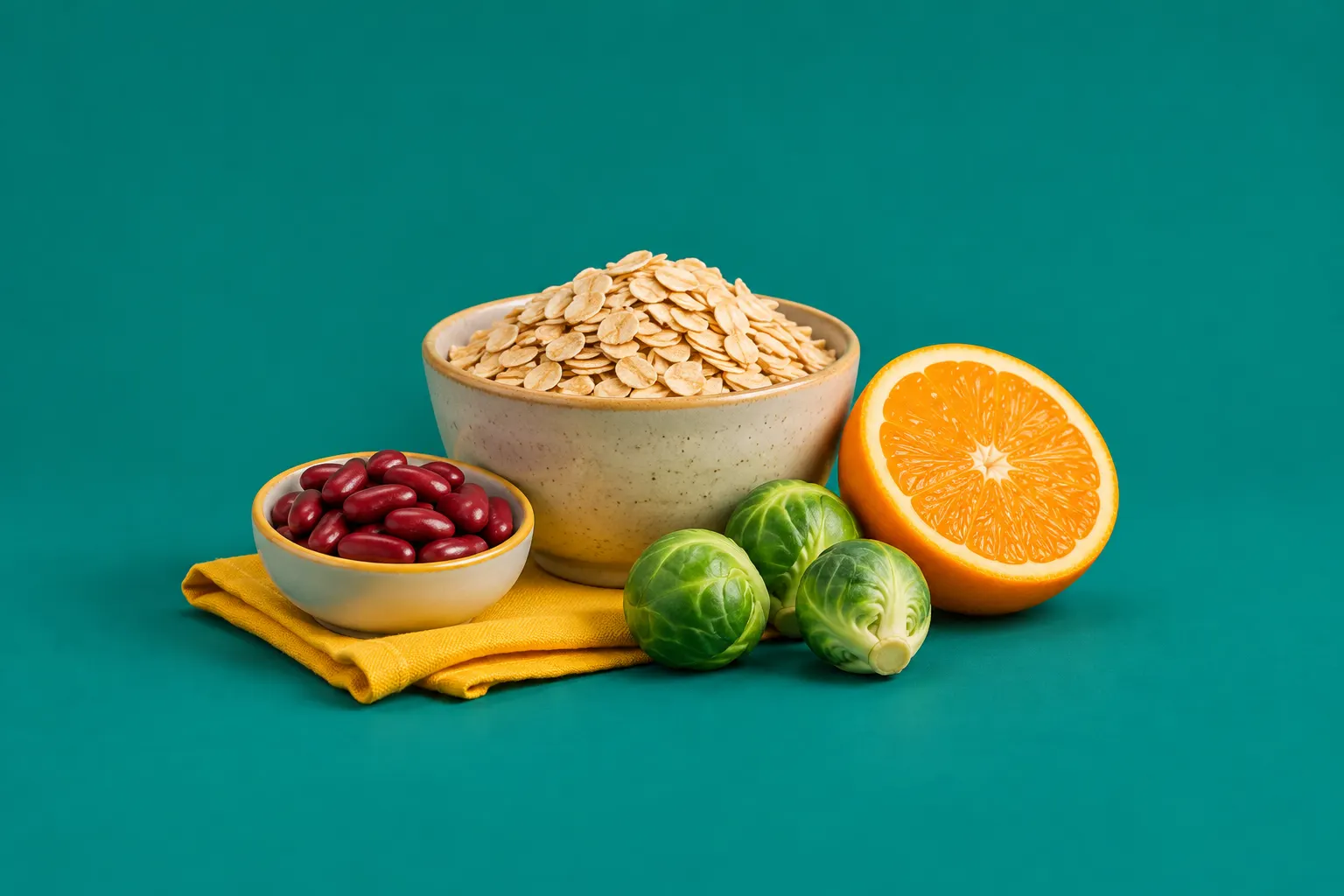
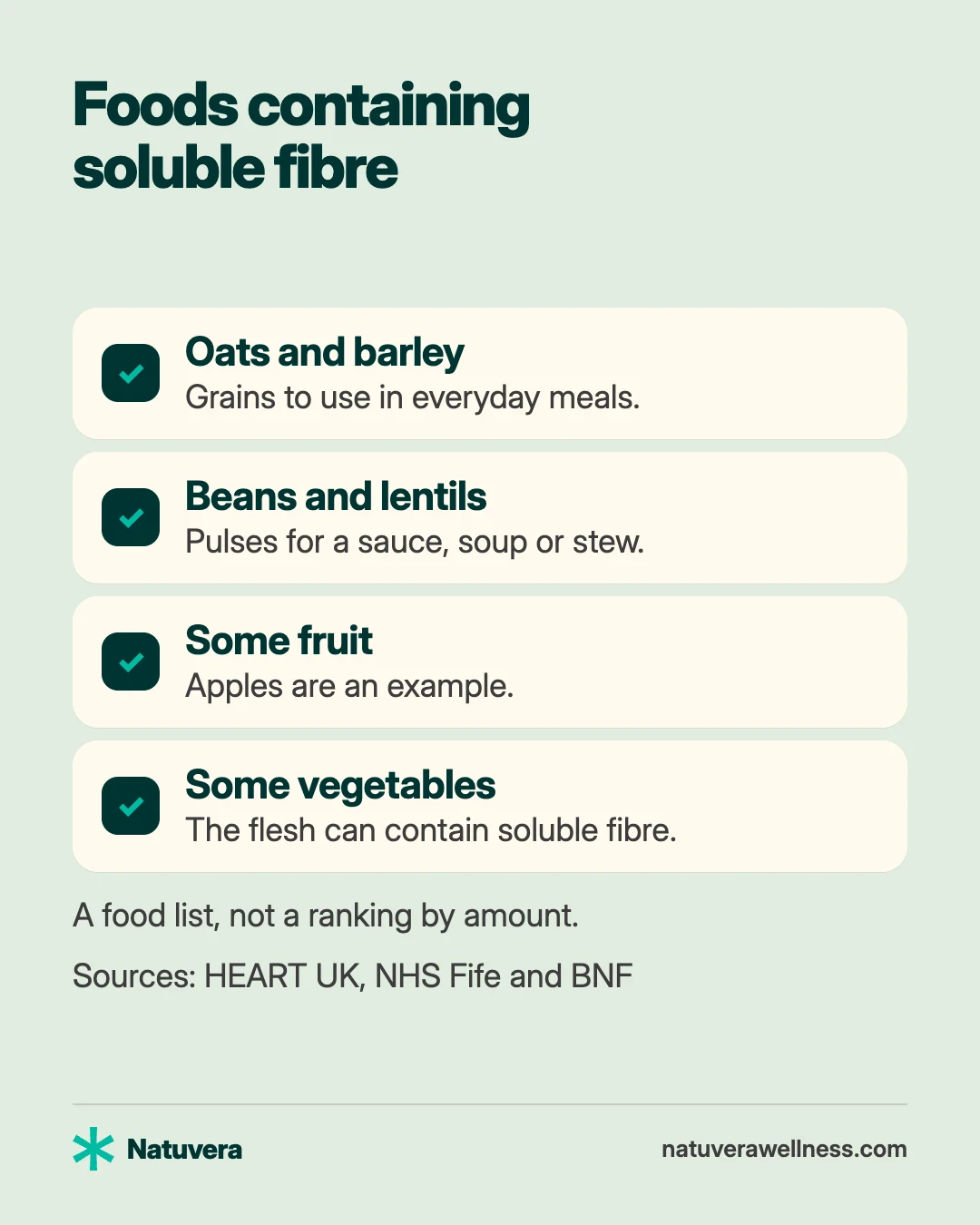
Soluble fibre foods include oats, barley, beans, lentils, and some fruit and vegetables. HEART UK identifies these food groups as sources, while NHS Fife specifically lists oats, beans, pulses and the flesh of fruit and vegetables. Most foods contain a mixture of soluble and insoluble fibre. 12
The distinction describes properties of fibre. It is useful for reading a food list, but it does not divide whole foods into two exclusive groups. You can use the examples below to plan ordinary meals without trying to give each food a single label.
What is soluble fibre, compared with insoluble fibre?
Soluble fibre dissolves in water; insoluble fibre does not. St George's University Hospitals NHS Foundation Trust describes this distinction in its dietary fibre leaflet. 3 The British Nutrition Foundation explains that some traditionally soluble fibres thicken with fluid, while cellulose is an example traditionally classed as insoluble. It also cautions that this division oversimplifies a varied group of substances. 4
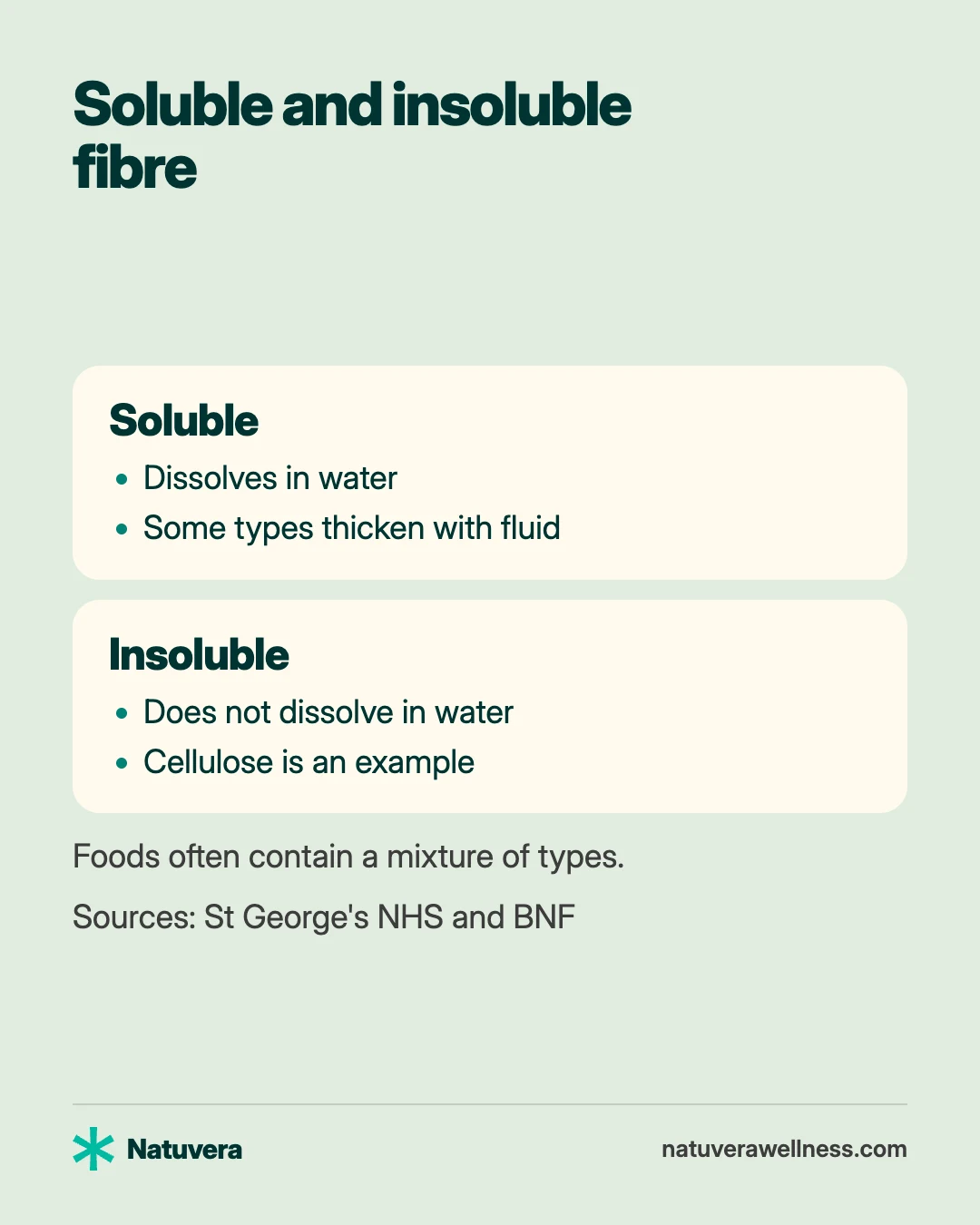
Water solubility is not the same as viscosity, which describes thickening, or fermentability, which describes breakdown by gut bacteria. The Foundation discusses these as different characteristics. A simple soluble-versus-insoluble list cannot capture all those differences. 4
A food can appear on a soluble fibre list and still contain insoluble fibre: HEART UK notes that most foods contain a mixture of both in varying proportions. 1
Which everyday foods contain soluble fibre?
HEART UK lists oats and barley, peas and beans, some fruit and vegetables, nuts and seeds among food sources of soluble fibre. NHS Fife also identifies lentils within its practical fibre-food information. The following groups are places to start when planning meals, rather than a ranking by soluble fibre content. 12
Oats and barley
Oats and barley are examples of grains containing soluble fibre. Porridge is a familiar way to use oats, while barley can be included in a soup or stew. Read preparation instructions for the food you buy, rather than assuming all grains need the same cooking method. 1
Beans and lentils
Beans and lentils are pulses, and NHS Fife includes beans and pulses among soluble fibre sources. Its food table also gives examples for cooked lentils and kidney beans. 2
For a meal idea, try lentils in a tomato sauce or add beans to a vegetable stew. These are cooking suggestions, not measured servings of soluble fibre. Keep the other parts of a familiar dish if you want to try the ingredient without changing the entire recipe.
Fruit and vegetables
NHS Fife identifies the flesh of fruit and vegetables as a source of soluble fibre. It lists skins, peel, pith and stalks among places insoluble fibre is found. That is another example of why a whole food can contain both types. 2
The British Nutrition Foundation lists pectins among the fibre types found in fruit and vegetables, and St George's lists apples and citrus fruits among sources of soluble fibre. 43
Are total fibre figures the same as soluble fibre figures?
No. HEART UK's explanation that foods contain mixed fibre types matters when reading a food table. Unless the source specifies soluble fibre, do not describe a total fibre figure as the soluble amount. 1
For example, NHS Fife lists 50 g of porridge oats as containing 4.0 g of fibre. The table gives fibre content, not a separate soluble fibre measurement. This figure describes the source's stated food portion. 2
How can you use the list in everyday meals?
The NHS advises getting fibre from varied foods, including oats, beans, fruit, vegetables, brown rice and wholemeal bread. You can combine foods from that broader list rather than limiting your diet to those labelled soluble. 5
Our guide to daily fibre intake explains the UK recommendation. The companion article on how to increase fibre intake offers practical swaps and meal ideas.
Make changes gradually and know when to ask
The NHS suggests keeping drinks, especially water, part of your meals. The British Nutrition Foundation advises gradual fibre increases. If you have a prescribed diet or fluid limit, speak to your GP or pharmacist before changing it. 54
If you have a medical condition, are pregnant or breastfeeding, or take medicines and need individual dietary advice, speak to your GP or pharmacist. A food list cannot establish the cause of ongoing symptoms or replace advice specific to your circumstances.
Common questions
Which foods contain soluble fibre?
Examples include oats, barley, beans, lentils and some fruit and vegetables. Most foods contain both soluble and insoluble fibre.
What is the difference between soluble and insoluble fibre?
Soluble fibre dissolves in water; insoluble fibre does not. The British Nutrition Foundation cautions that this division simplifies a varied group of substances.
Is the fibre in lentils all soluble?
No. Foods contain mixed fibre types. NHS Fife lists total fibre for cooked lentils, not a separate soluble fibre amount.
General information about food and health, not medical advice. If you have symptoms or a medical condition, take any medicine or are pregnant, speak to your GP or pharmacist.
References
- HEART UK. Fibre and wholegrain recommendations. n.d. Read the source (accessed 12 November 2026).
- NHS Fife. Increasing your fibre Intake. n.d. Read the source (accessed 12 November 2026).
- St George's University Hospitals NHS Foundation Trust. Dietary Fibre. 2024. Read the source (accessed 12 November 2026).
- British Nutrition Foundation. Fibre. n.d. Read the source (accessed 12 November 2026).
- NHS. NHS guidance on food and digestion. 2023. Read the source (accessed 12 November 2026).
- NHS. Bloating. 2026. Read the source (accessed 12 November 2026).