
In short
- NHS ispaghula husk information lists wind and bloating as side effects.
- Inadequate fluid can cause choking or obstruction.
- Breathing difficulty and sudden mouth or throat swelling need emergency help.
- Check medicine timing and suitability with your GP or pharmacist.
In this article
Psyllium husk side effects are usually mild: the NHS lists wind and bloating and says they should get better after a few days. 1
Ispaghula husk is the name UK medicines use for psyllium husk from Plantago ovata, so this article uses the NHS ispaghula husk guidance and the UK prescribing information for its safety details. 2 For the ingredient itself, read what is psyllium husk?.
Which side effects are commonly discussed?
The NHS lists wind and bloating as side effects of ispaghula husk and says a sudden increase in dietary fibre can be the reason. It says these symptoms should settle after a few days; if they continue or worry you, ask a doctor or pharmacist. 1
The UK prescribing information lists flatulence and abdominal distension, but does not provide a numerical frequency for these events. It also lists bowel and oesophageal obstruction and faecal impaction. 2
Why is enough fluid essential?
Ispaghula husk absorbs water and swells. The UK prescribing information warns that inadequate fluid can lead to obstruction of the throat or oesophagus, choking, or intestinal obstruction. Chest pain, vomiting and difficulty swallowing or breathing are symptoms it names in that warning. 2
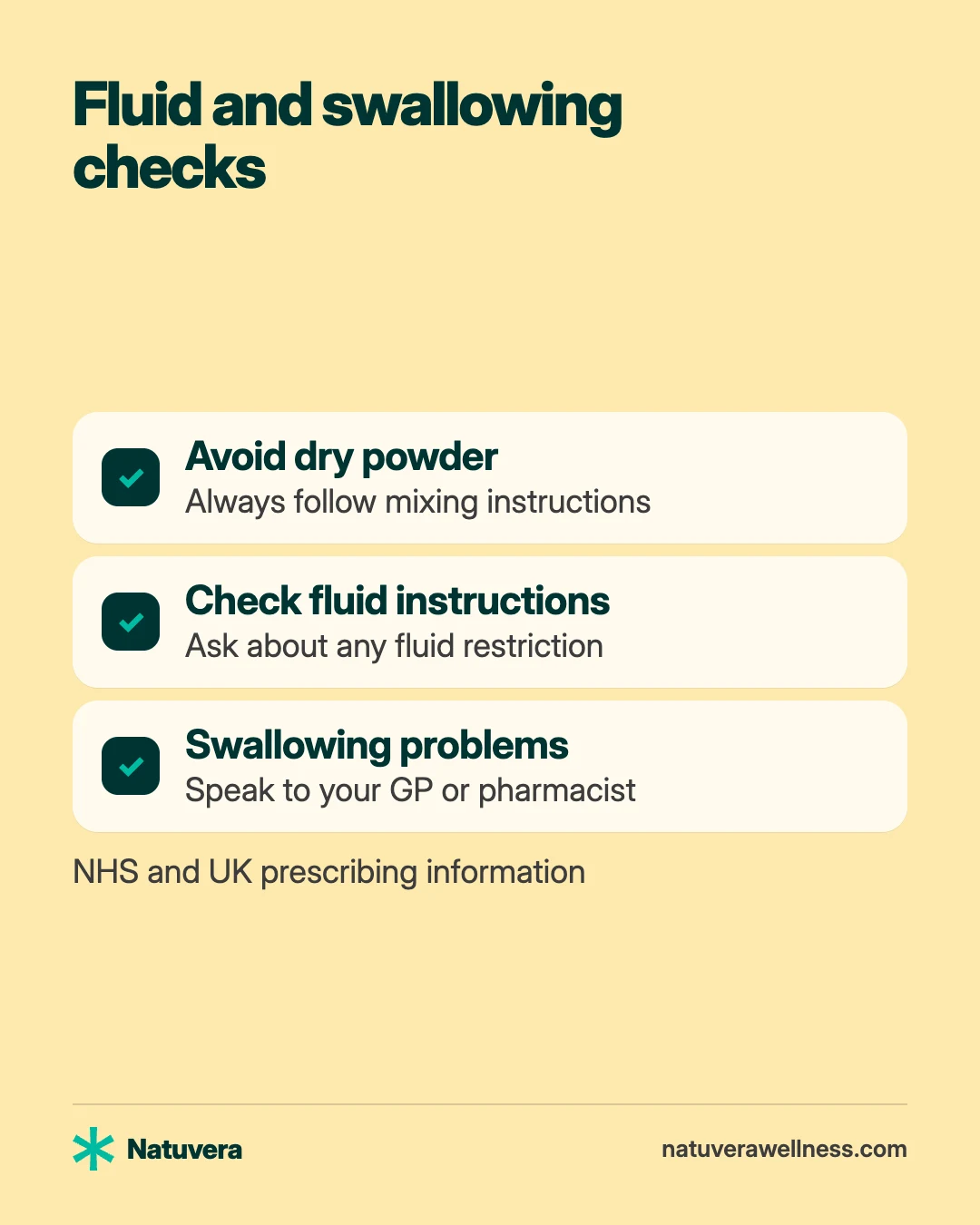
Do not swallow loose dry husk or powder. Follow the preparation and fluid instructions supplied with what you are taking. NHS guidance describes mixing the medicine with water and drinking it immediately, and cautions that inadequate fluid may worsen constipation. 3 2
If you have been told to restrict fluids, speak to your GP or pharmacist before use. The prescribing information requires adequate liquid, so the preparation instructions need to be considered alongside your existing medical advice. Do not change a prescribed fluid restriction yourself. 2
The NHS also advises against taking the medicine immediately before sleep. Read your own leaflet rather than assuming that any time of day or method of mixing is suitable. 3
Can psyllium cause an allergy?
An allergy is a separate concern from wind. NHS advice describes itching affecting the eyes, nose or skin and says to stop the medicine and seek professional advice if a mild allergic reaction is suspected. 1
The prescribing information explains that exposure can occur through swallowing, skin contact or inhaling powder. It particularly flags people who handle powder repeatedly. When preparing it, avoid breathing in the dust; NHS preparation advice gives the same precaution. 2 3
How should it be timed with medicines?
The NHS says ispaghula husk can affect how other medicines, vitamins and supplements are absorbed. Its interactions page says to take them more than an hour before or after; its how-to page says at least 30 minutes. Ask your GP or pharmacist about timing for your specific preparation and medicines. 4 3
Give the pharmacist the names of everything you take, including vitamins and herbal preparations. 4
The NHS specifically flags medicines including lithium, carbamazepine, digoxin, diabetes medicines, mesalazine and pain medicines that can cause constipation. Its list is not exhaustive. It also says that taking different laxatives together needs a doctor or pharmacist's recommendation because side effects may be more likely. 4
Who should check with a GP or pharmacist first?
Before use, tell your GP or pharmacist about swallowing or throat problems, possible bowel blockage, a previous allergic reaction, or a persistent unusual change in your poo. The NHS also names bowel muscle weakness and phenylketonuria in its suitability guidance. 5
Speak to your GP or pharmacist if you have a medical condition, are pregnant or breastfeeding, or take medicines. NHS information says most adults can take ispaghula husk, including during pregnancy and breastfeeding, but that general statement does not replace checking your circumstances and the specific preparation. 5
The NHS advises talking to a doctor if constipation has not improved or has worsened after 3 days of taking the medicine. Seek advice sooner for warning signs. Do not keep increasing what you take in response to worsening symptoms. 3
When should you get medical help?
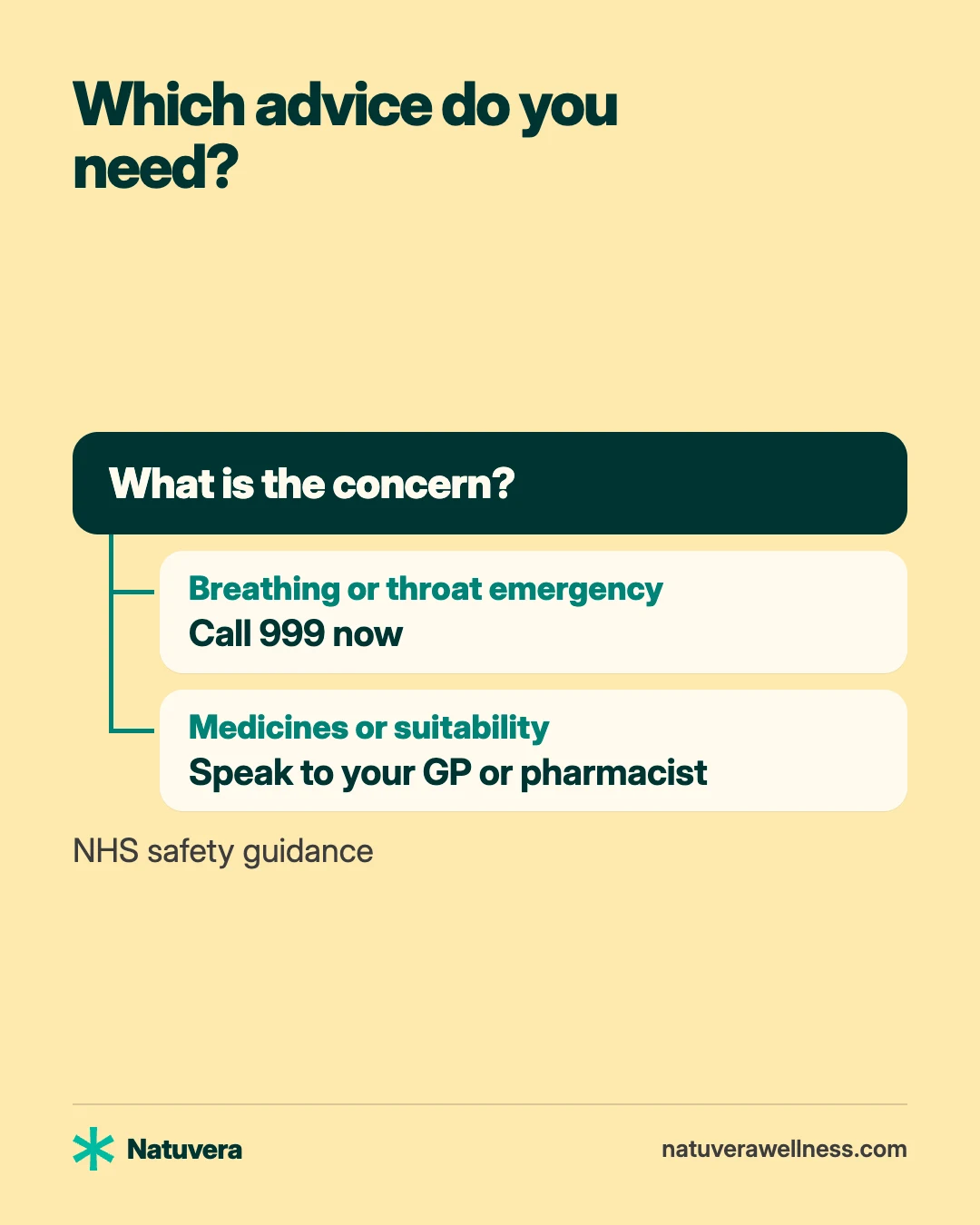
Do not drive yourself to A&E if a serious allergic reaction is suspected. Follow the emergency call handler's advice. 1
If your concern began with a label mentioning California, see psyllium husk cancer warning. For symptoms, show your GP or pharmacist the label or leaflet and explain what happened.
Common questions
Can psyllium husk cause bloating?
Yes. The NHS lists wind and bloating as side effects of ispaghula husk. Persistent or worrying symptoms need advice from a doctor or pharmacist.
Can you swallow psyllium powder dry?
Do not swallow it dry. UK prescribing information warns about choking and obstruction with inadequate fluid; follow the preparation instructions.
Can psyllium affect other medicines?
Ispaghula husk can affect absorption of some medicines and supplements. Ask your GP or pharmacist about timing for your specific preparation and medicines.
General information about food and health, not medical advice. If you have symptoms or a medical condition, take any medicine or are pregnant, speak to your GP or pharmacist.
References
- NHS. Ispaghula husk: side effects. 2026. Read the source (accessed 12 November 2026).
- Electronic Medicines Compendium. Ispaghula husk: UK summary of product characteristics. 2021. Read the source (accessed 12 November 2026).
- NHS. Ispaghula husk: how and when to take it. 2026. Read the source (accessed 12 November 2026).
- NHS. Ispaghula husk: other medicines and herbal supplements. 2026. Read the source (accessed 12 November 2026).
- NHS. Ispaghula husk: who can and cannot take it. 2026. Read the source (accessed 12 November 2026).
- NHS. Constipation. 2023. Read the source (accessed 12 November 2026).