In short
- NHS suggestions include comfortable movement, smaller meals and tummy massage.
- There is no reliable instant fix or single timetable for bloating to settle.
- Continuing bloating needs GP advice, while severe pain or other warning signs need faster help.
In this article
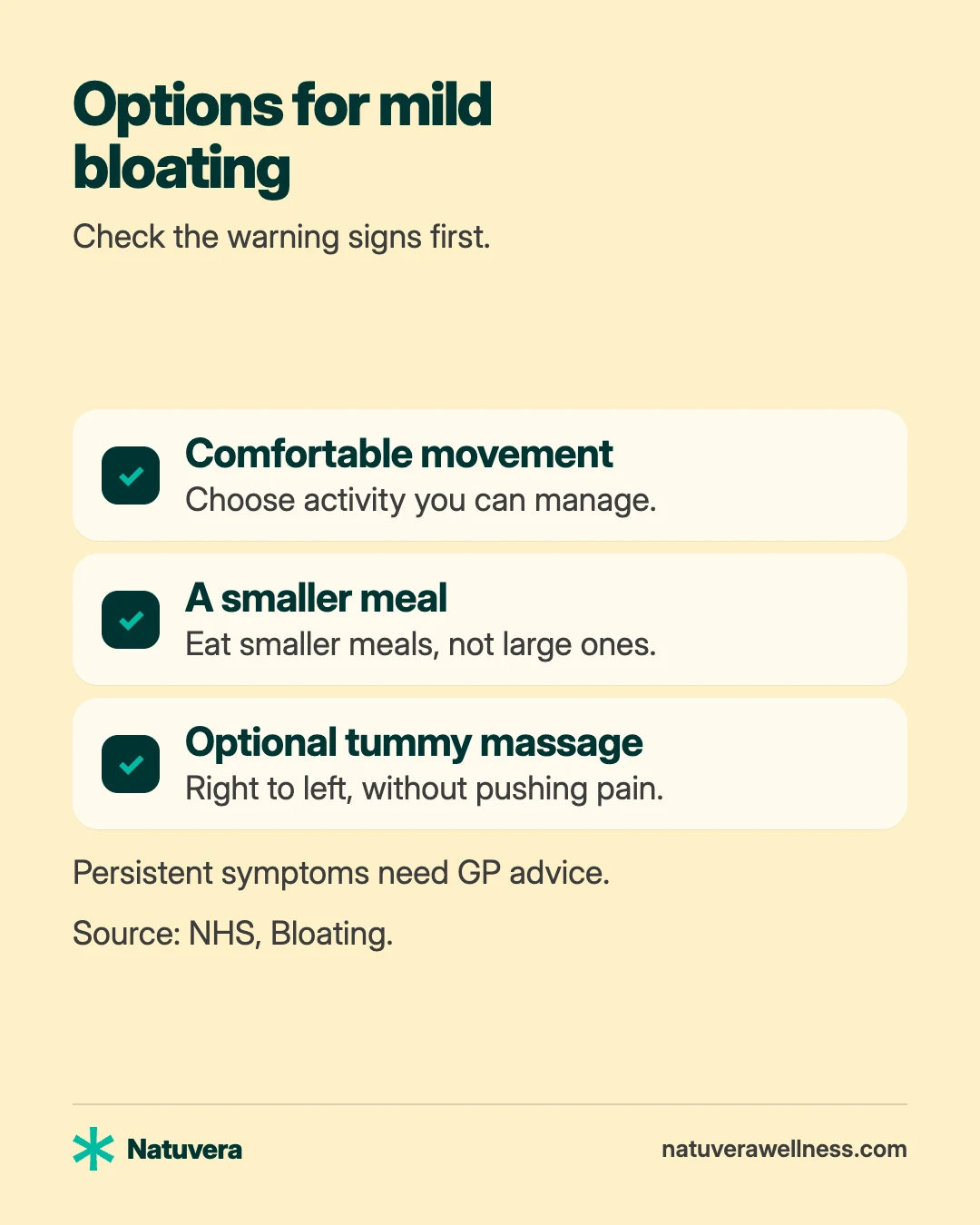
For occasional bloating, NHS suggestions include movement you can comfortably manage, smaller meals and a right-to-left tummy massage for trapped wind. There is no instant fix, but the NHS says bloating is very common, there are things you can do to ease it, and treatment is often not needed; but persistent or painful symptoms need assessment. 1
What can you try now?
If symptoms are mild and none of the warning signs above applies, the NHS's everyday suggestions are a reasonable starting point. 1
Move if it feels comfortable
The NHS says exercise can help when you feel bloated, as well as being part of everyday prevention. Choose something manageable, such as a comfortable walk, rather than making yourself do an intense workout while you feel unwell. 1
Keep the next meal manageable
Eat slowly, chew well and avoid a very large meal. The NHS's lifestyle advice recommends regular meals rather than skipping them, and its bloating page favours smaller meals over large ones. Try to sit comfortably upright instead of slouching over your food. 41
For example, make time to eat your usual lunch without rushing it between tasks. Avoid turning discomfort into a rule that you must stop eating until your tummy looks different. The advice is about meal size and eating habits, not an instruction to go without food.
Consider a gentle tummy massage
The NHS suggests massaging your tummy from right to left to release trapped wind. Do not press through pain or use it to delay medical advice. 1
If you are pregnant or breastfeeding, have a medical condition, have recently had surgery or take medicines, speak to your GP or pharmacist about what is appropriate. You can choose another suitable everyday step while seeking advice; massage is optional.
What should you avoid doing?
Do not add lots of fizzy drinks, alcohol or caffeine, rush into a large late meal, or keep eating foods you already know you are intolerant to. These are among the things the NHS advises against for bloating. It also cautions against large amounts of gas-producing foods and lots of fatty, spicy, sugary or processed food. 1
You do not need to reorganise every meal based on an online list.
If you have diagnosed IBS and need to avoid many foods to manage symptoms, the NHS advises seeing a GP. A dietitian or specialist may be appropriate. A highly restrictive diet is not a suitable quick experiment for an unexplained episode of swelling. 5
What if constipation is part of the problem?
Hard or lumpy poo, straining, going less often than usual and incomplete emptying can indicate constipation. Bloating can accompany it. Mention the bowel symptoms when seeking advice, and follow the urgent guidance above if you currently have bloating with constipation. 61
For constipation, ask a pharmacist or GP for advice and follow the warning signs above.
A pharmacist can help with bloating and constipation. Explain what has changed, what you have tried and any medicines you take. If you already follow a care plan for a digestive condition, use that plan and ask for advice if symptoms change. 16
How quickly should bloating settle?
There is no single timetable for everyone. The NHS says bloating often does not need treatment; when it does, the appropriate approach depends on the cause. 1
Notice whether the discomfort is easing, staying the same or returning. If you need advice, describe that pattern rather than saying only that a quick tip failed.
For the everyday approach, read how to reduce bloating. For an explanation of noticeable swelling, see why bloating can make your tummy look pregnant. If symptoms remain, worsen or become more frequent after you have seen a GP, seek advice again. 3
Common questions
What helps bloating fast?
NHS suggestions include comfortable movement, smaller meals and a right-to-left tummy massage for trapped wind.
What does the NHS say about drinks and bloating?
The NHS advises limiting fizzy drinks when dealing with bloating. Persistent or recurring bloating needs GP advice.
How long does bloating last?
There is no single timetable. The NHS says treatment is often unnecessary, but persistent or recurring bloating needs GP advice and urgent warning signs need faster assessment.
General information about food and health, not medical advice. If you have symptoms or a medical condition, take any medicine or are pregnant, speak to your GP or pharmacist.
References
- NHS. Bloating. 2026. Read the source (accessed 12 November 2026).
- NHS England. Public twice as likely to check bank balance regularly than for signs of cancer. 2025. Read the source (accessed 12 November 2026).
- NHS. Symptoms of ovarian cancer. 2025. Read the source (accessed 12 November 2026).
- NHS. 5 lifestyle tips for a healthy tummy. 2026. Read the source (accessed 12 November 2026).
- NHS. Diet, lifestyle and medicines for IBS (irritable bowel syndrome). 2025. Read the source (accessed 12 November 2026).
- NHS. Constipation. 2023. Read the source (accessed 12 November 2026).