In short
- NHS suggestions include smaller meals, slower eating and regular movement.
- Constipation and food intolerance are among the possible causes of bloating.
- Frequent or continuing bloating needs a GP assessment; urgent signs need faster help.
In this article
- What causes bloating?
- Slow down and make meals more manageable
- Choose drinks without adding more fizz
- If you are constipated, look at the whole routine
- Review possible food triggers without cutting everything out
- Keep movement gentle and practical
- Make changes you can describe and review
- What if bloating keeps coming back?
- Common questions
- References
For occasional bloating, the NHS suggests smaller meals, slower eating and regular movement. Gas, swallowed air and constipation are common explanations, but bloating that keeps returning or does not go away needs a GP assessment rather than more dietary experiments. 1
What causes bloating?
Bloating describes uncomfortable fullness; a visible increase in tummy size is called distension. They can happen together, but you can feel very bloated without much visible change. People can have either or both. 4
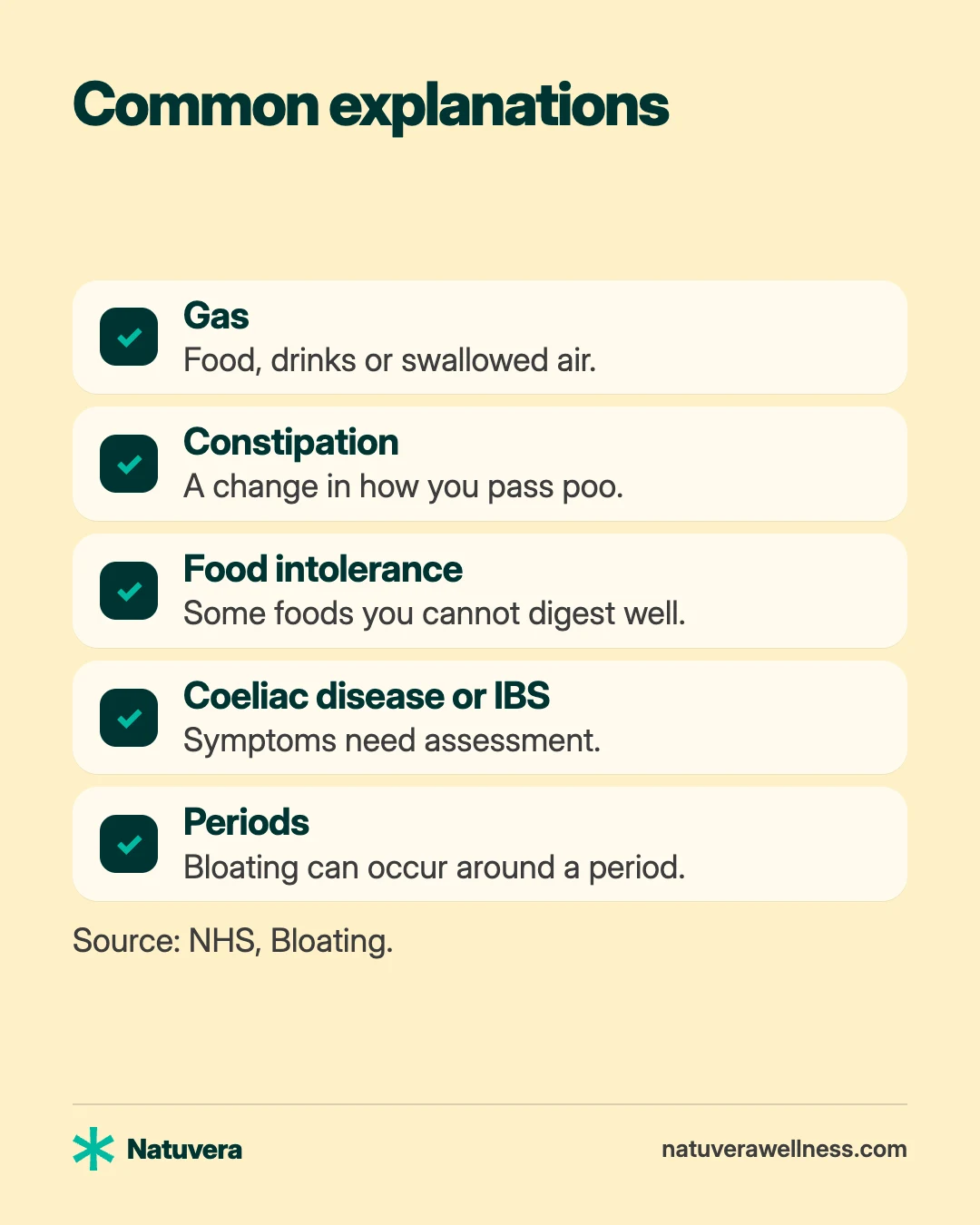
The NHS lists gas as the most common cause. Swallowing air while eating, fizzy drinks and some foods can contribute. Constipation, food intolerance, coeliac disease and irritable bowel syndrome (IBS) are other possible explanations. Some people also notice bloating around their period. This list gives possibilities, not a way to diagnose yourself from the shape of your tummy. 1
If the visible swelling is your main concern, why bloating can make your tummy look pregnant explains that question separately. If you are uncomfortable now, what helps bloating fast covers the short-term options.
Slow down and make meals more manageable
The NHS recommends eating slowly, chewing thoroughly, eating regularly and avoiding oversized meals. Its bloating advice also says to chew with your mouth closed and avoid slouching while eating. These are changes to how you eat, without needing to start a complicated exclusion diet. 51
For example, if lunch usually means rushing a large sandwich between calls, use the next lunch as a chance to sit down and eat without working through each mouthful. If your evening meal is uncomfortably large, consider smaller meals spread more evenly through the day. The aim is comfortable eating, not reducing how much nourishment you get overall.
Avoid making the late evening your main opportunity to eat a very large meal. The NHS advises against large meals near bedtime. 5
Choose drinks without adding more fizz
The NHS notes that fizzy drinks can contribute to bloating. It also recommends cutting back on large amounts of alcohol and caffeine-containing drinks when dealing with bloating. 61
If you are constipated, look at the whole routine
Constipation can involve hard or lumpy poo, straining, going less often than usual, or feeling that your bowel has not emptied fully. You may feel bloated too. It is worth mentioning these details rather than only saying that your tummy looks bigger. 7
For constipation, ask a pharmacist or GP for advice and follow the warning signs above. 7
Think about what you would tell a pharmacist: when you last passed poo, whether it was hard, whether you strained, and what has changed. If constipation comes with bloating now, use the urgent advice above rather than assuming it is suitable for home management. A pharmacist can help with bloating and constipation. 1
Review possible food triggers without cutting everything out
Some people notice that particular foods repeatedly precede symptoms. A GP or dietitian may ask you to keep a food and symptoms diary to help identify a possible intolerance, but says not to remove foods without advice from a GP or dietitian. Commercial home intolerance tests are not recommended because evidence for their accuracy is limited. 8
A useful note can be brief: what you ate, roughly when you ate it, what you felt, and whether your bowel habits were different. You do not need to rate every ingredient as good or bad. For an appointment, notes such as “full and uncomfortable after lunch, with hard poo” are more specific than “everything upsets my stomach”.
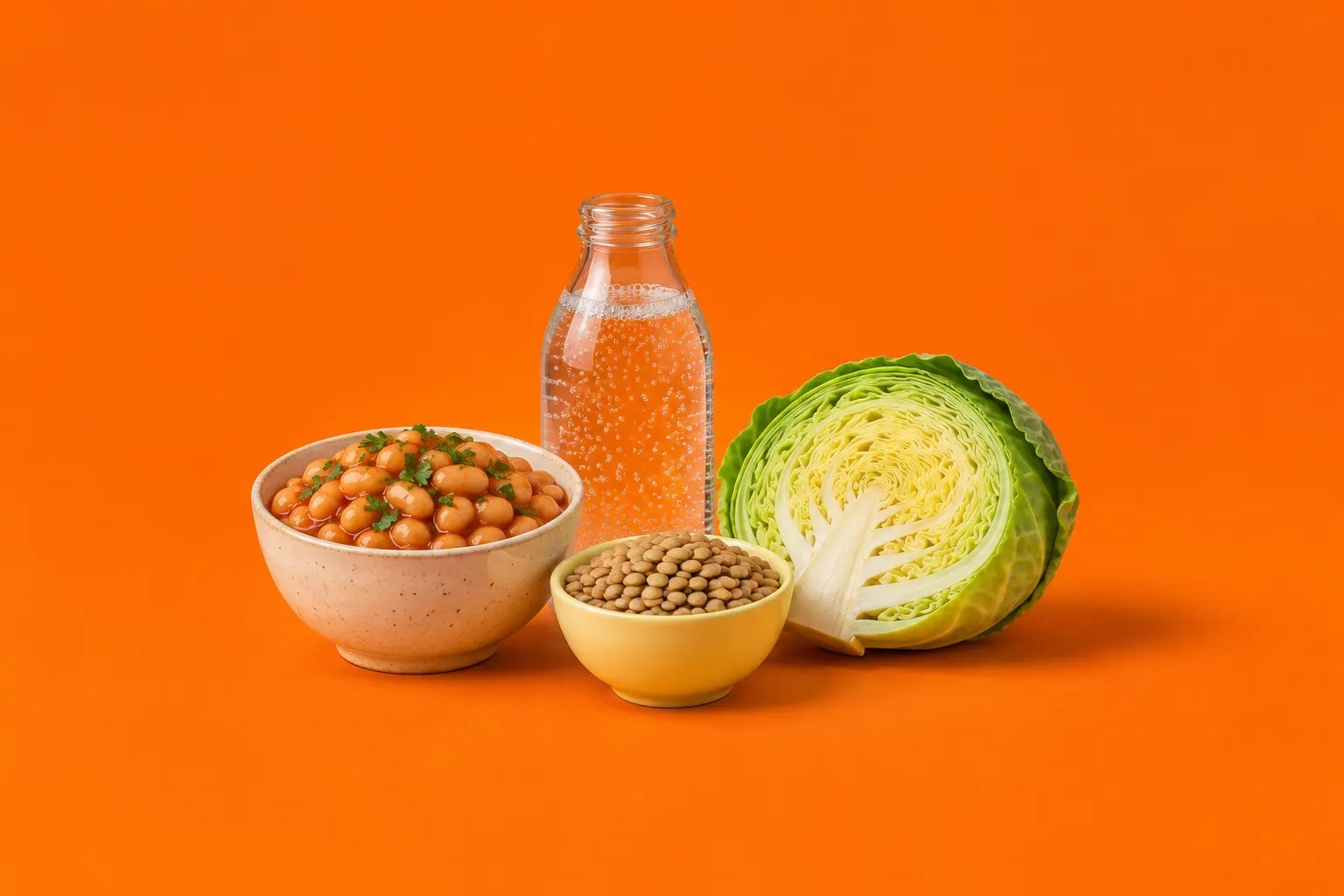
The NHS bloating page flags large amounts of gas-producing foods, such as cabbage and pulses, and lots of fatty, spicy, sugary or processed food. This is not a reason to remove every food on the list indefinitely. Use your own symptoms and seek advice if eating becomes increasingly restricted. 18
If coeliac disease is a possibility, discuss testing before starting a gluten-free diet. The NHS explains that gluten needs to remain in the diet during testing for the results to be accurate. Do not turn a suspicion about bread into a self-directed gluten exclusion before that conversation. 9
Keep movement gentle and practical
Regular activity is part of NHS advice for bloating, and its constipation advice includes walking. Choose movement you can comfortably manage, such as a walk as part of your usual day. 17
The NHS also lists a right-to-left tummy massage for trapped wind. It is an optional suggestion, not something to push through when your tummy hurts or a reason to postpone urgent advice. If you have a medical condition, are pregnant or breastfeeding, or take medicines, speak to your GP or pharmacist about what is suitable for you. 1
Make changes you can describe and review
For people with diagnosed IBS, the British Dietetic Association recommends keeping a food and symptom diary and changing one thing at a time. This makes it easier to see what, if anything, changed. Its advice is specific to IBS and should not be read as a diagnosis for everyone with bloating. 10
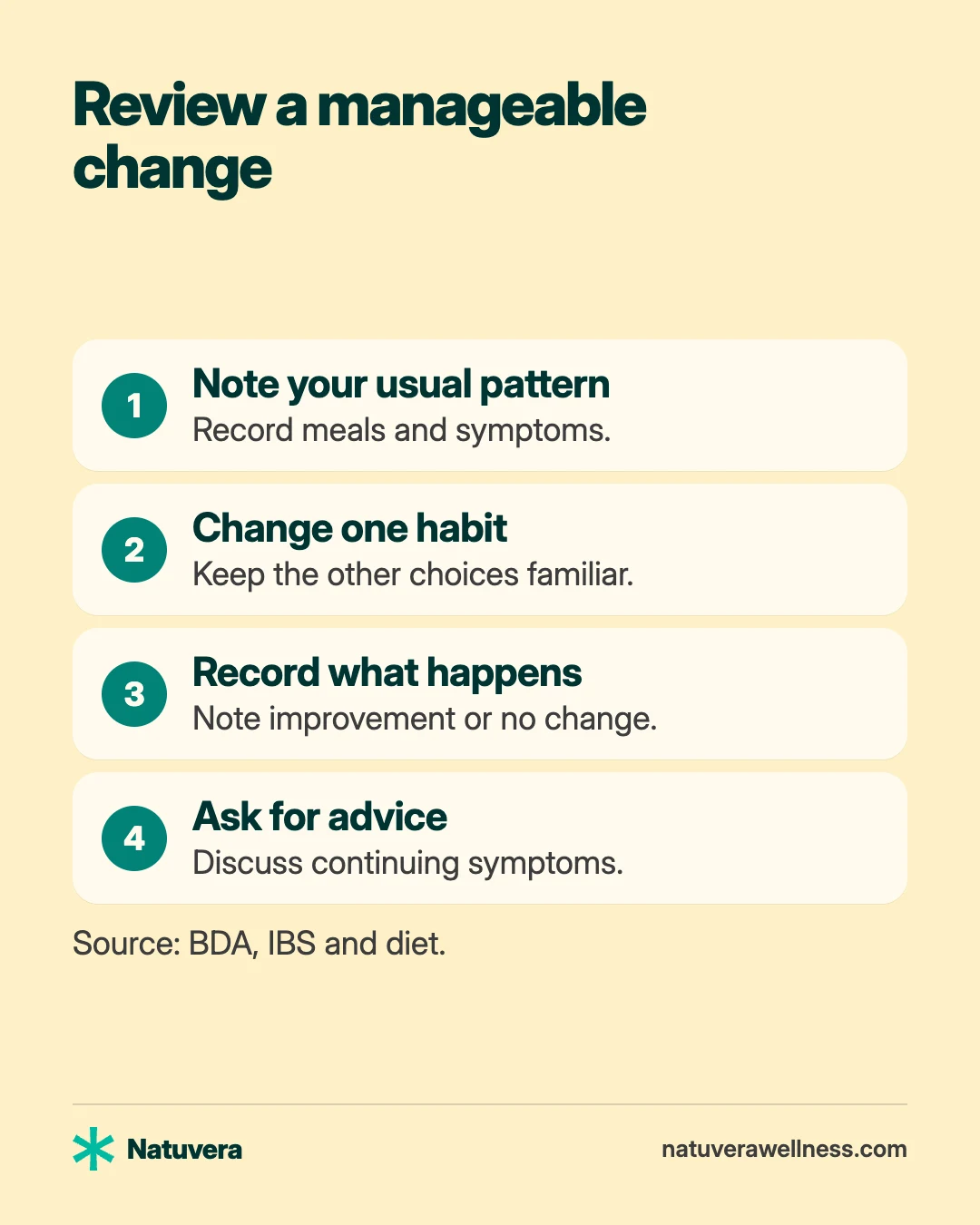
A simple example is to record your usual lunch, replace its fizzy drink, and note what happens while leaving the meal itself familiar. If you change the drink, portion, ingredients and eating time together, you will have less useful information about which change mattered. Treat your notes as information to discuss, not proof of an intolerance.
The BDA also advises seeking specialist support when dietary intake becomes limited. A dietitian can put the advice in the context of your symptoms and usual food intake. Do not keep adding exclusions because the last set did not solve the problem. 10
What if bloating keeps coming back?
A GP can assess continuing symptoms and may arrange further investigation or refer you to a dietitian. The NHS says treatment for bloating is often unnecessary, but when it is needed it depends on the cause. Regular symptoms deserve that assessment even if they sometimes ease between episodes. 1
Bring a short account of the pattern: whether it is new, how often it happens, whether the swelling goes down, and any pain, bowel changes or change in appetite. Add what you have already tried. If you have already seen a GP and your symptoms have not gone away, are worse or happen more often, the NHS says to go back. 3
Common questions
How can I reduce bloating?
For occasional bloating, the NHS suggests smaller meals, slower eating and regular movement. Seek a GP assessment if symptoms are frequent or continue.
Why am I always bloated?
Possible causes include gas, constipation, food intolerance, coeliac disease and IBS. Continuing symptoms need assessment rather than self-diagnosis.
Can constipation cause bloating?
Yes. The NHS lists bloating alongside constipation. Hard poo, straining and incomplete emptying are useful details to mention when asking for advice.
General information about food and health, not medical advice. If you have symptoms or a medical condition, take any medicine or are pregnant, speak to your GP or pharmacist.
References
- NHS. Bloating. 2026. Read the source (accessed 12 November 2026).
- NHS England. Public twice as likely to check bank balance regularly than for signs of cancer. 2025. Read the source (accessed 12 November 2026).
- NHS. Symptoms of ovarian cancer. 2025. Read the source (accessed 12 November 2026).
- Guts UK. Bloating and distension. 2023. Read the source (accessed 12 November 2026).
- NHS. 5 lifestyle tips for a healthy tummy. 2026. Read the source (accessed 12 November 2026).
- NHS. NHS guidance on food and digestion. 2023. Read the source (accessed 12 November 2026).
- NHS. Constipation. 2023. Read the source (accessed 12 November 2026).
- NHS. Food intolerance. 2026. Read the source (accessed 12 November 2026).
- NHS. Diagnosis of coeliac disease. 2023. Read the source (accessed 12 November 2026).
- British Dietetic Association. Irritable bowel syndrome (IBS) and diet. 2022. Read the source (accessed 12 November 2026).