In short
- Swallowed air, gas associated with food, constipation and digestive conditions are possible explanations for bloating.
- PMS can include bloating, and hormone changes may be involved, although its cause is not fully understood.
- Lactose intolerance and coeliac disease need appropriate assessment rather than a diagnosis based on one meal.
- Recurring or persistent bloating needs a GP review; severe or accompanying symptoms can need urgent help.
In this article
- How do swallowed air and food contribute?
- Can eating patterns explain bloating after a meal?
- Could constipation be the cause?
- What causes bloating in women around their period?
- How does IBS fit in?
- Could a food intolerance, such as lactose intolerance, explain it?
- When might coeliac disease need investigating?
- What should you tell your GP or pharmacist?
- Common questions
- References
Bloating is commonly caused by gas in your gut, including swallowed air and gas associated with food and drink. Constipation, food intolerance, irritable bowel syndrome (IBS), coeliac disease and changes around your period are other possible explanations; the symptom alone cannot identify the cause. 1
How do swallowed air and food contribute?
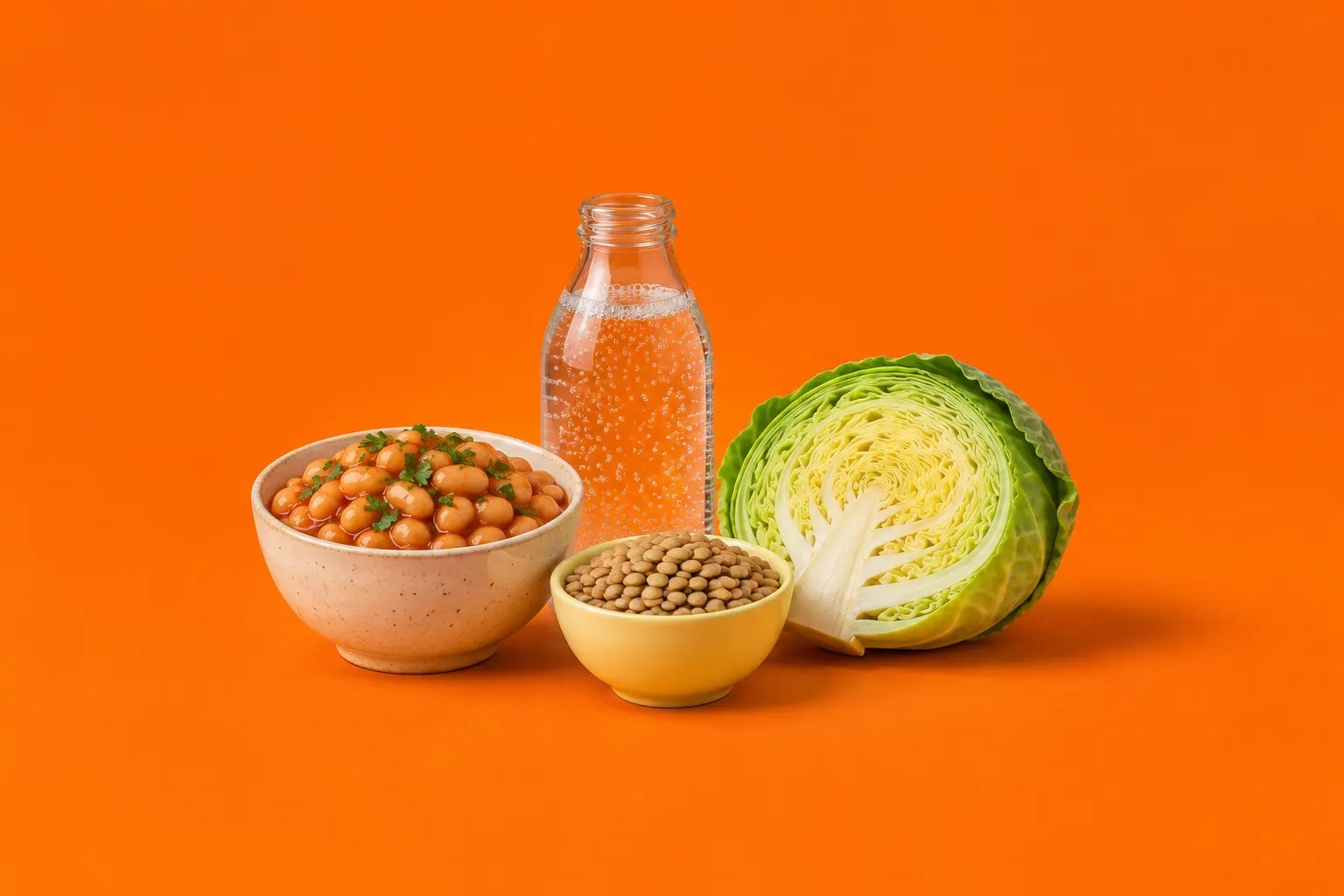
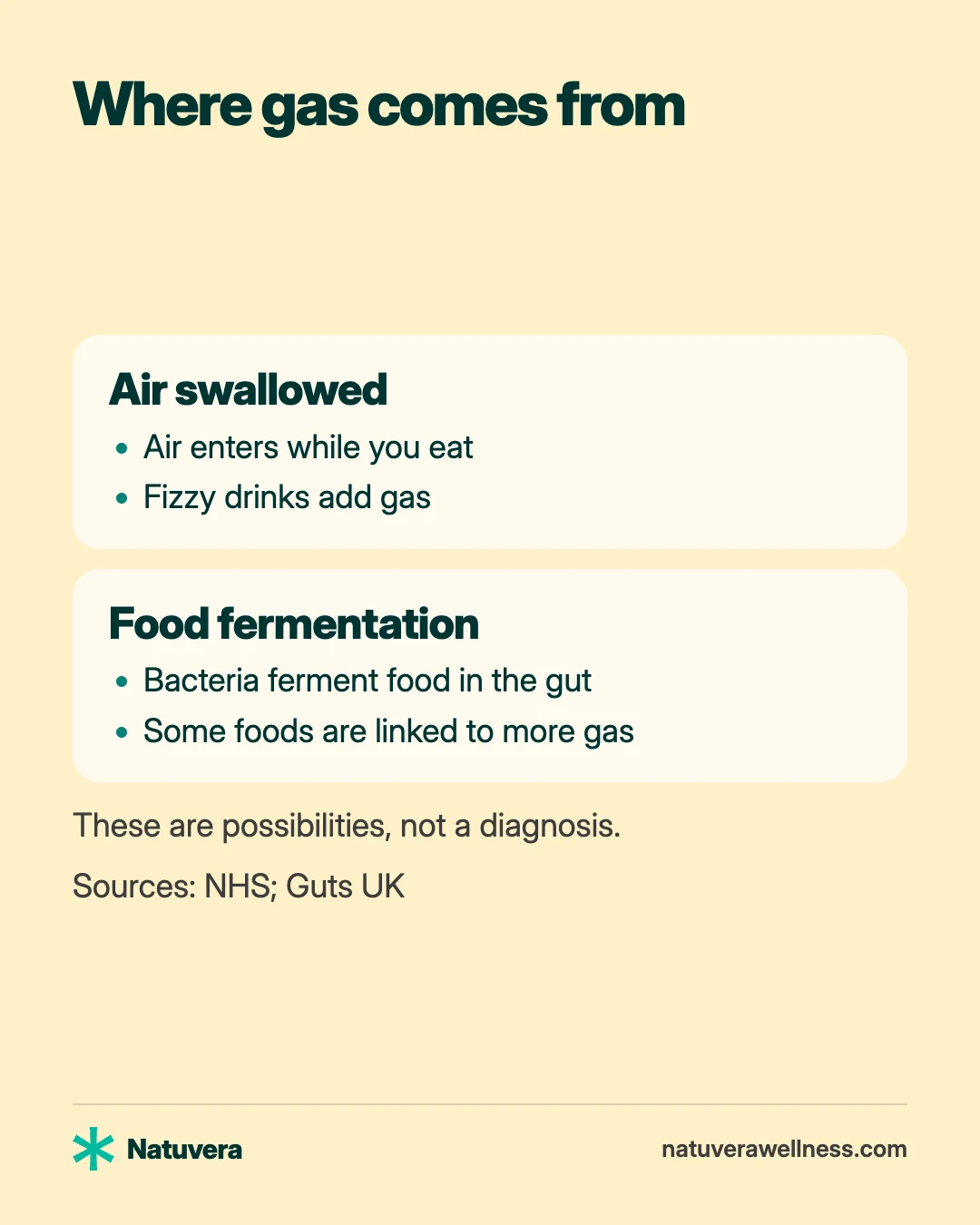
Gas has different routes into the gut. Air can be swallowed while eating, and fizzy drinks introduce gas. Bacteria fermenting food inside the gut are another part of the explanation for bloating. The NHS names cabbage, beans and lentils as examples of foods associated with gas. 14
The feeling and the visible change are also different. Guts UK describes bloating as fullness or pressure and distension as a visible widening of the tummy; you can have either or both. It lists slow movement of gut contents and difficulty passing gas among possible mechanisms, and says the overall explanation is not fully understood. 4
So a noticeably swollen tummy does not tell you which food, if any, is responsible. For more on the visible change, read why bloating can make your tummy look pregnant.
The sections below explain other possible causes and when to seek medical advice.
Can eating patterns explain bloating after a meal?
How you eat is worth discussing alongside what you eat. NHS digestive-health advice addresses rushed eating, skipped meals and very large meals, including meals close to bedtime. These are eating patterns to describe when discussing discomfort, rather than evidence of a particular food intolerance. 5
For example, “I feel uncomfortable after a rushed lunch, but also after a large evening meal” tells a clinician something different from “it always follows milk”. Neither description establishes a diagnosis. Note the pattern without assuming that the most recent ingredient must be the explanation.
Stress can also affect the pattern. The NHS explains that stress is associated with slower digestion, bloating and constipation in some people, but faster digestion and diarrhoea in others. This is a possible contributing factor to mention, not a reason to dismiss physical symptoms. 5
Could constipation be the cause?
Constipation can include going less often than usual, hard or lumpy poo, straining and a feeling that your bowels have not fully emptied. Bloating or nausea can accompany these changes. You do not need to have stopped pooing altogether for constipation to be a possibility. 6
The NHS lists changes in daily routine, ignoring the urge to poo and some medicines among possible causes of constipation. That makes recent changes worth mentioning, even if the symptom you notice most is a swollen tummy. Do not stop a prescribed medicine without speaking to the GP. 6
If you currently have bloating with constipation, follow the urgent advice above.
What causes bloating in women around their period?
Premenstrual syndrome (PMS) can include bloating or cramping in the weeks before a period. It can affect anyone who has periods. Symptoms differ between people and can change from month to month. 7
The NHS says the cause of PMS is not fully understood, but changes in hormone levels during the menstrual cycle may be involved. That is more cautious than saying a particular hormone definitely explains your bloating. A repeating monthly pattern is useful information, but it cannot establish why a new or persistent symptom is happening. 7
Get symptoms checked if they affect daily life, and do not assume that continuing swelling is simply part of your cycle. 73
How does IBS fit in?
IBS can involve bloating alongside tummy pain or cramps, diarrhoea or constipation. The NHS describes pain that is often worse after eating and better after a poo, with better and worse days. Food, drink, stress or anxiety can be triggers, although flare-ups can also happen without an obvious reason. 8
Bloating on its own does not confirm IBS. A GP can assess the symptoms and check for other explanations. The NHS advises seeing a GP if you suspect IBS and have had symptoms for over 4 weeks. That advice does not replace the earlier warning signs or mean you should delay seeking help. 8
Could a food intolerance, such as lactose intolerance, explain it?
Lactose intolerance is one example of a food intolerance associated with bloating. Lactose is a sugar in dairy foods. The NHS describes insufficient production of the body's own lactase enzyme as the most common cause of lactose intolerance. 9
Symptoms can start within minutes or hours after food or drink containing lactose and can include wind, tummy discomfort and changes in poo. However, an episode after a dairy-containing meal is not enough to establish the cause. See a GP for symptoms that keep returning, and do not remove foods without advice from a GP or dietitian. 9
A food intolerance is different from a food allergy. Sudden swelling of the mouth or throat, or difficulty breathing after eating, means you should call 999 rather than assume it is ordinary digestive discomfort. 9
When might coeliac disease need investigating?
Persistent, unexplained bloating is among the symptoms for which the NHS recommends coeliac disease testing. Testing is also recommended for adults with IBS. Discuss that possibility with your GP rather than assuming a reaction to bread proves what is wrong. 10
The NHS says gluten needs to remain in your diet during testing for accurate results. Do not start a gluten-free diet before the diagnosis is confirmed by a specialist. If you have already changed your diet, tell your GP before arranging tests. 10
What should you tell your GP or pharmacist?
Explain when the bloating started, whether it comes and goes, and any pain, bowel changes, early fullness or urinary symptoms. If you have already seen a GP and symptoms remain, worsen or become more frequent, go back. 3
If you have a medical condition, are pregnant or breastfeeding, or take medicines, speak to your GP or pharmacist about what is suitable before trying something new.
For everyday NHS advice, read how to reduce bloating. For the separate question about discomfort today, see what helps bloating fast.
Common questions
What causes a bloated stomach?
Possible explanations include swallowed air, gas associated with food, constipation, food intolerance, IBS, coeliac disease and changes around a period. The symptom alone does not identify the cause.
What causes bloating in women?
Digestive causes can affect women, and PMS can include bloating before a period. Continuing bloating should be checked, particularly with pelvic pain, early fullness or changes in peeing.
Why am I always bloated?
Recurring bloating can have several explanations, including constipation and digestive conditions. See a GP rather than assuming it is food-related; persistent symptoms need assessment.
Can a food intolerance cause bloating?
Yes. Lactose intolerance is one example. Repeated symptoms after meals deserve a GP assessment, and foods should not be removed without advice from a GP or dietitian.
General information about food and health, not medical advice. If you have symptoms or a medical condition, take any medicine or are pregnant, speak to your GP or pharmacist.
References
- NHS. Bloating. 2026. Read the source (accessed 14 November 2026).
- NHS England (leaflet hosted by Mencap). Speak to your doctor if something in your body does not feel right (EasyRead leaflet). 2025. Read the source (accessed 14 November 2026).
- NHS. Symptoms of ovarian cancer. 2025. Read the source (accessed 14 November 2026).
- Guts UK. Bloating and distension. 2023. Read the source (accessed 14 November 2026).
- NHS. 5 lifestyle tips for a healthy tummy. 2026. Read the source (accessed 14 November 2026).
- NHS. Constipation. 2023. Read the source (accessed 14 November 2026).
- NHS. PMS (premenstrual syndrome). 2024. Read the source (accessed 14 November 2026).
- NHS. Symptoms of IBS (irritable bowel syndrome). 2025. Read the source (accessed 14 November 2026).
- NHS. Lactose intolerance. 2026. Read the source (accessed 14 November 2026).
- NHS. Diagnosis of coeliac disease. 2023. Read the source (accessed 14 November 2026).