In short
- Gas, constipation, food intolerance, IBS and periods are possible explanations.
- Bloating is a feeling of fullness; distension is visible swelling, and either can occur.
- Bloating most days for 3 weeks or more needs GP advice; other warning signs need earlier help.
In this article
Bloating can make your tummy look much bigger, even when you are not pregnant. The NHS lists gas, constipation, food intolerance, IBS and changes around your period among possible causes; appearance alone cannot tell you which explanation applies. 1
Why can a tummy swell through the day?
The NHS describes bloating as a tummy that feels uncomfortably full and may seem larger. Eating and drinking can introduce swallowed air, and fizzy drinks can contribute gas. A tummy that changes after meals therefore has several possible explanations, without the change itself identifying a particular condition. 1
Guts UK distinguishes bloating, the feeling of fullness or pressure, from distension, the visible widening of the abdomen. People can have either or both. It also describes people reporting less swelling on waking and more symptoms after meals as the day continues. That is a recognised pattern, but not a test that proves the cause is harmless. 4
For a GP conversation, it helps to separate what you feel from what you see. You could say “my tummy feels tight after lunch” or “the visible swelling is there when I wake up too”. Both descriptions are clearer than trying to decide whether your tummy looks a particular number of months pregnant.
Feeling bloated and visible swelling are different
A full, pressured feeling does not always mean a visibly swollen tummy, and visible swelling does not tell you how much gas is present. Guts UK explains why the tummy can bulge. Normally the diaphragm relaxes and the belly wall muscles tighten to make room as the gut fills. In people with distension this reflex works the other way: the diaphragm tightens and the belly wall relaxes, so the gut contents are pushed down and the belly bulges outwards. About half of people with bloating have no visible distension at all. 4
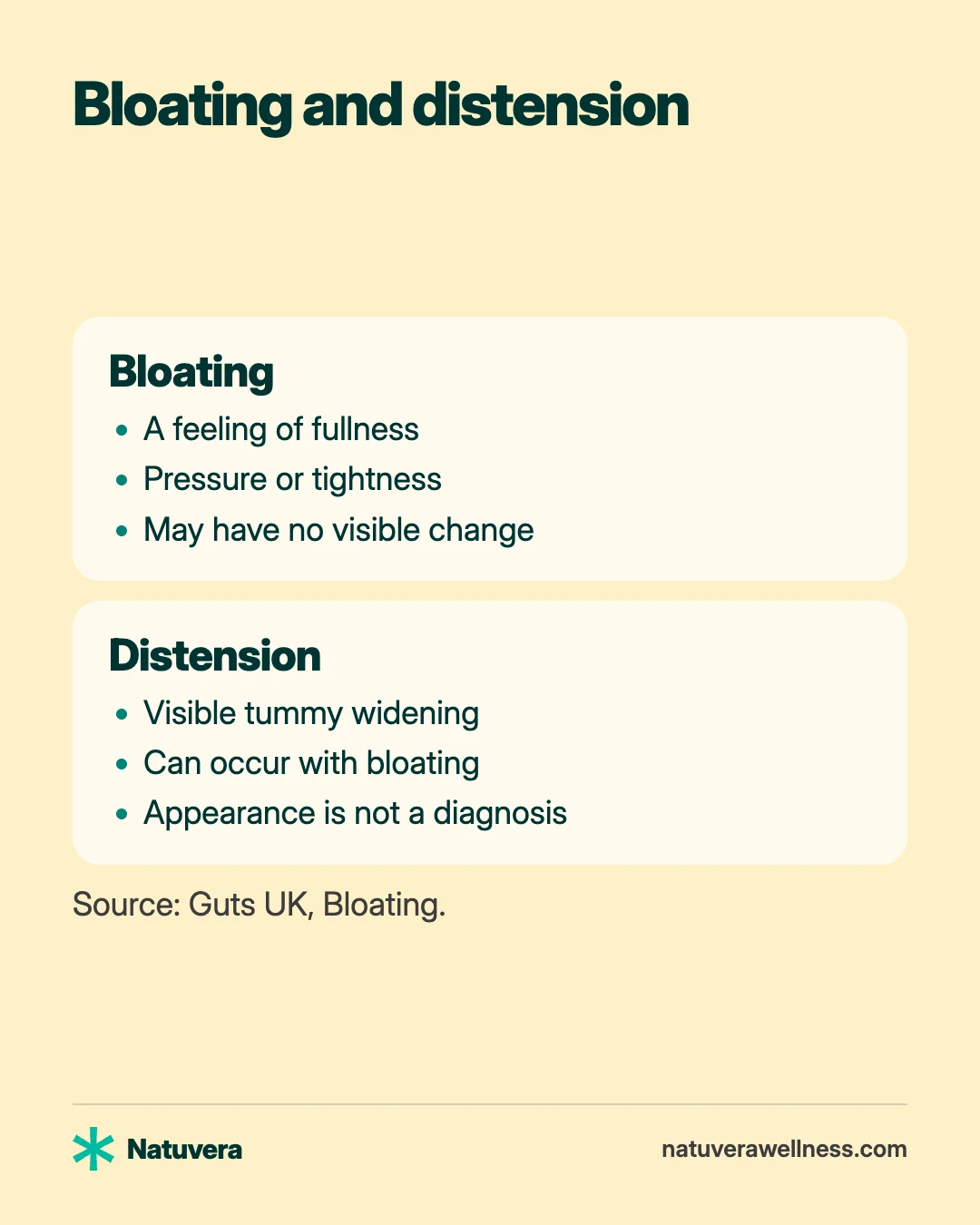
This distinction matters when describing your experience. If the main problem is pain, mention the pain. If the main change is a tummy that stays visibly swollen, say that. If both happen, describe both.
Could constipation explain it?
Constipation can come with bloating and is not only about how many days pass between toilet visits. The NHS also lists hard or lumpy poo, straining and a feeling of incomplete emptying. Those details may be more informative than the size of the swelling. 5
If this sounds familiar, tell a pharmacist or GP about both the bowel symptoms and the swelling. Because the bloating page advises urgent assessment for bloating with constipation, use the warning block above to decide your next step. 51
Avoid assuming that a large amount of extra fibre will be a quick answer. The NHS says to increase dietary fibre gradually. Your description of the problem should include whether the bowel change is new and whether the bloating is continuing, rather than just what food you plan to add next. 5
What about food intolerance or IBS?
Food intolerance can cause bloating, wind, diarrhoea and tummy pain after eating. The NHS advises seeing a GP for symptoms that keep returning and warns against removing foods without professional advice. A repeated pattern is a reason to discuss an intolerance, not confirmation that you have one. 6
IBS can also involve bloating, usually alongside symptoms such as tummy pain or cramps and diarrhoea or constipation. Symptoms can vary between better and worse days. The NHS advises seeing a GP if you think you may have IBS and have had symptoms for over 4 weeks; a swollen tummy alone does not establish the diagnosis. 7
You can take brief notes about meals and symptoms to an appointment. Record what actually happened, including occasions when the food caused no problem. Avoid making your food choices more and more limited while trying to identify a cause. A useful question for your clinician is whether you need help from a dietitian, rather than which entire food group to remove next. 6
Can periods or stress play a part?
Some people feel bloated around their period. The NHS lists this alongside digestive causes, so it is reasonable to mention a repeating monthly pattern when you speak to a clinician. However, do not label new or continuing swelling as hormonal without getting it checked. 1
The NHS also explains that stress affects digestion differently in different people: for some it is associated with slower digestion, bloating and constipation, and for others with diarrhoea. That does not mean symptoms should be dismissed as worry. Stress is information to mention alongside the physical symptoms. 8
What can you change while arranging advice?
For occasional bloating without warning signs, NHS suggestions include slower eating, smaller meals, less fizz and regular activity. If you have a medical condition, are pregnant or breastfeeding, or take medicines, speak to your GP or pharmacist about changes that are suitable for you. 1
For the broader approach, read how to reduce bloating. If you need practical options for discomfort today, what helps bloating fast explains the NHS suggestions.
If you have already seen a GP and your symptoms have not gone away, are worse or happen more often, the NHS says to go back. 3
Common questions
Why am I so bloated I look pregnant?
Gas, constipation, food intolerance, IBS and changes around a period can cause bloating. How your tummy looks cannot identify the cause, and continuing swelling needs assessment.
Can constipation make my tummy look swollen?
Constipation can come with bloating. Tell a pharmacist or GP about hard or lumpy poo, straining, incomplete emptying and any change from your usual bowel habits.
Why does bloating get worse through the day?
Guts UK describes people reporting more symptoms after meals through the day. The pattern is useful to describe to a clinician, but it does not prove the cause is harmless.
General information about food and health, not medical advice. If you have symptoms or a medical condition, take any medicine or are pregnant, speak to your GP or pharmacist.
References
- NHS. Bloating. 2026. Read the source (accessed 12 November 2026).
- NHS England. Public twice as likely to check bank balance regularly than for signs of cancer. 2025. Read the source (accessed 12 November 2026).
- NHS. Symptoms of ovarian cancer. 2025. Read the source (accessed 12 November 2026).
- Guts UK. Bloating and distension. 2023. Read the source (accessed 12 November 2026).
- NHS. Constipation. 2023. Read the source (accessed 12 November 2026).
- NHS. Food intolerance. 2026. Read the source (accessed 12 November 2026).
- NHS. Symptoms of IBS (irritable bowel syndrome). 2025. Read the source (accessed 12 November 2026).
- NHS. 5 lifestyle tips for a healthy tummy. 2026. Read the source (accessed 12 November 2026).