In short
- The GB register lists two specific chromium claims with the same condition of use.
- The NHS lists meat, nuts and cereal grains as food sources.
- The NHS says around 25 micrograms a day should be enough for adults.
- People taking diabetes medicines or considering supplements during pregnancy should seek professional advice.
In this article
Chromium is a trace element naturally present in many foods, 1 including meat, nuts and cereal grains. 2 The Great Britain register authorises two specific statements about it: “Chromium contributes to normal macronutrient metabolism” and “Chromium contributes to the maintenance of normal blood glucose levels”. Both have conditions of use;. 3
What exactly do the authorised claims say?
For each of the two claims, the register gives the same condition:
“The claim may be used only for food which is at least a source of trivalent chromium as referred to in the claim SOURCE OF [NAME OF VITAMIN/S] AND/OR [NAME OF MINERAL/S] as listed in the Annex to Regulation (EC) No 1924/2006.” 3
You can read the entries and their status in the Great Britain nutrition and health claims register. The condition applies separately to each claim.3
Which foods contain chromium?
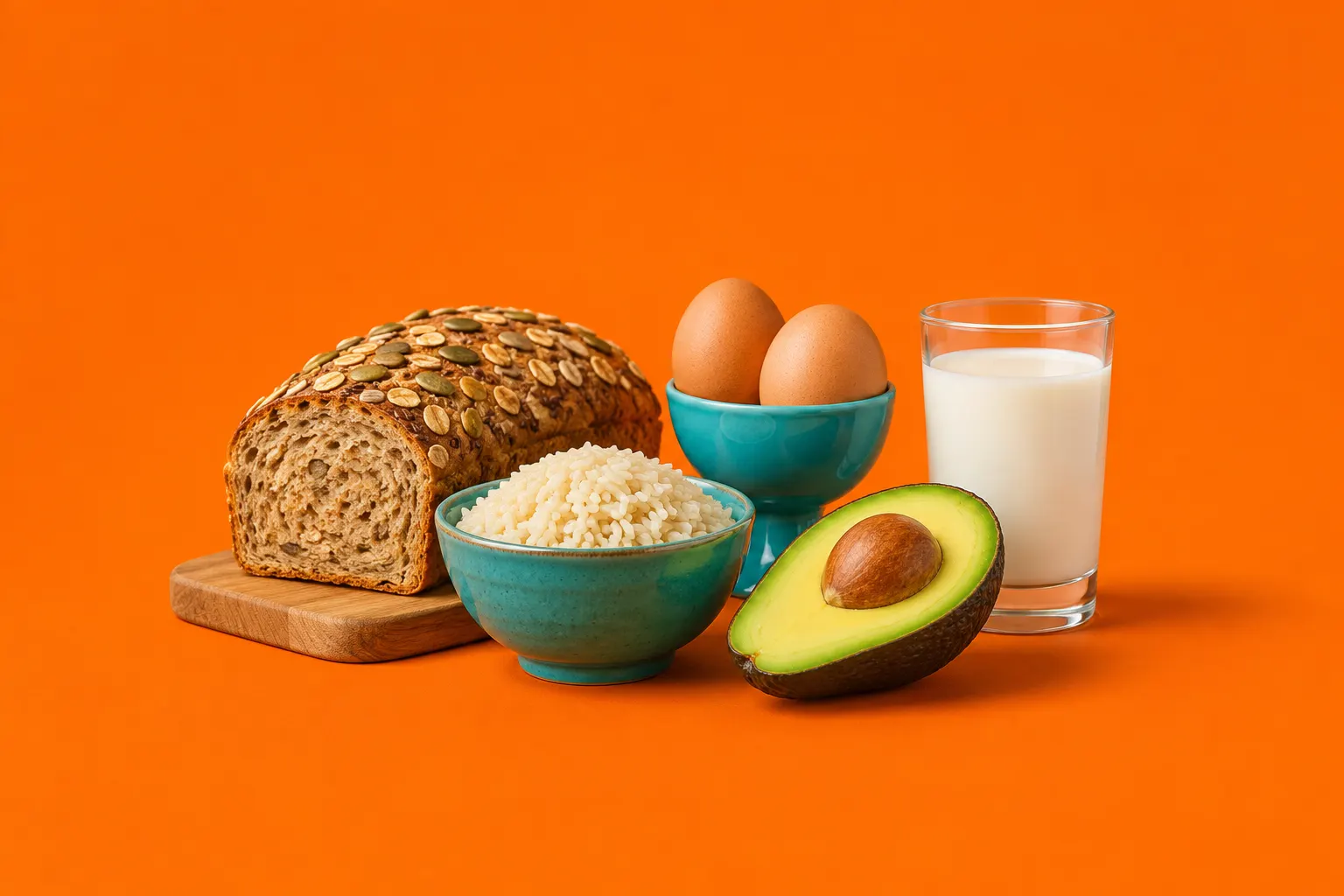
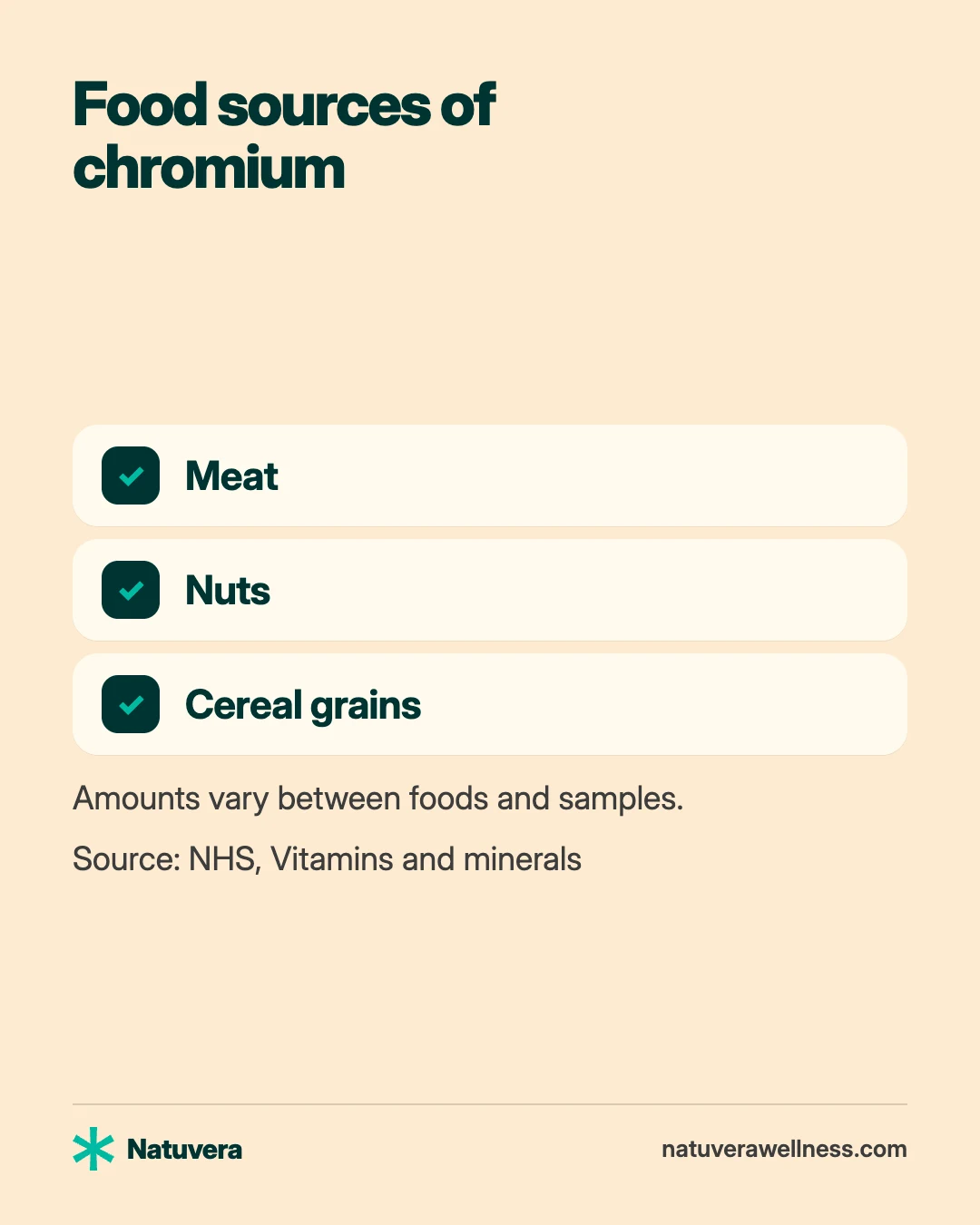
The NHS lists meat, nuts and cereal grains as sources. These are ordinary food categories, so chromium is not something found only in supplements or specialist foods. The NHS advice is that a varied and balanced diet should provide the chromium you need. 2
Precise food rankings are less straightforward than a short list suggests. The US National Institutes of Health describes substantial variation in food chromium measurements and explains that samples can be contaminated during analysis. Processing and cooking equipment can also contribute chromium to food. Its food values are therefore guides, rather than exact amounts for every serving. 1
What is the UK intake guidance?
The Department of Health’s 1991 guide to Dietary Reference Values lists a Safe Intake for adults of more than 25 micrograms of chromium a day. It appears in the table of other minerals, rather than as a Reference Nutrient Intake. 4
The current NHS summary says around 25 micrograms a day should be enough for adults and advises obtaining chromium through a varied and balanced diet. 42
In 2014 EFSA concluded that the evidence did not allow it to set an Average Requirement, Population Reference Intake or Adequate Intake for chromium. 5
Is chromium safe?
The Food Standards Agency’s Expert Group on Vitamins and Minerals found too little data in 2003 to set a Safe Upper Level for chromium. It noted that a total intake of about 10 mg a day would be expected to be without adverse effects. 6 The NHS says 10 mg or less a day from food and supplements is unlikely to cause any harm, and advises not taking too much. 2
Who should speak to a GP or pharmacist first?
If you take diabetes medicines or thyroid medicine, speak to your GP or pharmacist before taking a chromium supplement. The NIH fact sheet identifies potential interactions and advises people taking medicines regularly to discuss chromium intake with their healthcare professional. 1
If you are pregnant, planning pregnancy or breastfeeding, speak to your GP or pharmacist before adding a chromium supplement. NHS pregnancy advice directs readers to a GP, midwife or pharmacist about supplements. 7
For a wider explanation of energy expenditure, read the metabolism guide. For the separate question of life-stage changes, see whether metabolism slows with age.
Common questions
Which foods contain chromium?
The NHS lists meat, nuts and cereal grains as sources. Measurements vary, so a food table should not be treated as an exact analysis of a particular serving.
How much chromium do adults need?
The NHS says around 25 micrograms a day should be enough for adults. COMA used a historical Safe Intake framework, while EFSA later judged the evidence insufficient to set dietary reference values.
Should I check before taking a chromium supplement?
Speak to your GP or pharmacist first if you take diabetes medicines, are pregnant, are planning pregnancy or are breastfeeding. General dietary guidance does not establish personal supplement suitability.
General information about food and health, not medical advice. If you have symptoms or a medical condition, take any medicine or are pregnant, speak to your GP or pharmacist.
References
- National Institutes of Health, Office of Dietary Supplements. Chromium: Fact Sheet for Health Professionals. Publication year not stated. Read the source (accessed 12 November 2026).
- NHS. Vitamins and minerals: Others, chromium section. Publication year not stated. Read the source (accessed 12 November 2026).
- Department of Health and Social Care. Great Britain nutrition and health claims (NHC) register. 2026. Read the source (accessed 12 November 2026).
- Department of Health. Dietary Reference Values: A Guide, Table 27. 1991. Read the source (accessed 12 November 2026).
- EFSA Journal. Scientific Opinion on Dietary Reference Values for chromium. 2014. Read the source (accessed 12 November 2026).
- UK Health Security Agency. Chromium: toxicological overview, dietary intake section and reference 4. Publication year not stated. Read the source (accessed 12 November 2026).
- NHS. Vitamins and supplements in pregnancy. Publication year not stated. Read the source (accessed 12 November 2026).