In short
- NHS food suggestions include wholegrains, pulses and vegetables.
- The British Nutrition Foundation advises increasing fibre gradually and drinking enough fluid.
- NHS Fife lists 50 g of porridge oats as providing 4.0 g of fibre.
In this article
To increase your fibre intake, start with familiar meals: try wholemeal bread, wholegrain cereals, pulses and vegetables in place of lower-fibre choices. The NHS and British Nutrition Foundation suggest these food changes, with the Foundation advising gradual increases and enough fluid. 12
You do not need to rewrite the whole week's menu. Pick the meal you make most often and choose a change that fits it. If you want the UK daily recommendation and age table first, see how much fibre you need a day.
Food swaps that fit meals you already eat
NHS starchy-food advice suggests wholegrain choices and keeping potato skins on where possible. Try brown rice with a dish that usually has white rice, wholemeal bread for sandwiches, or a baked potato with its skin. 3
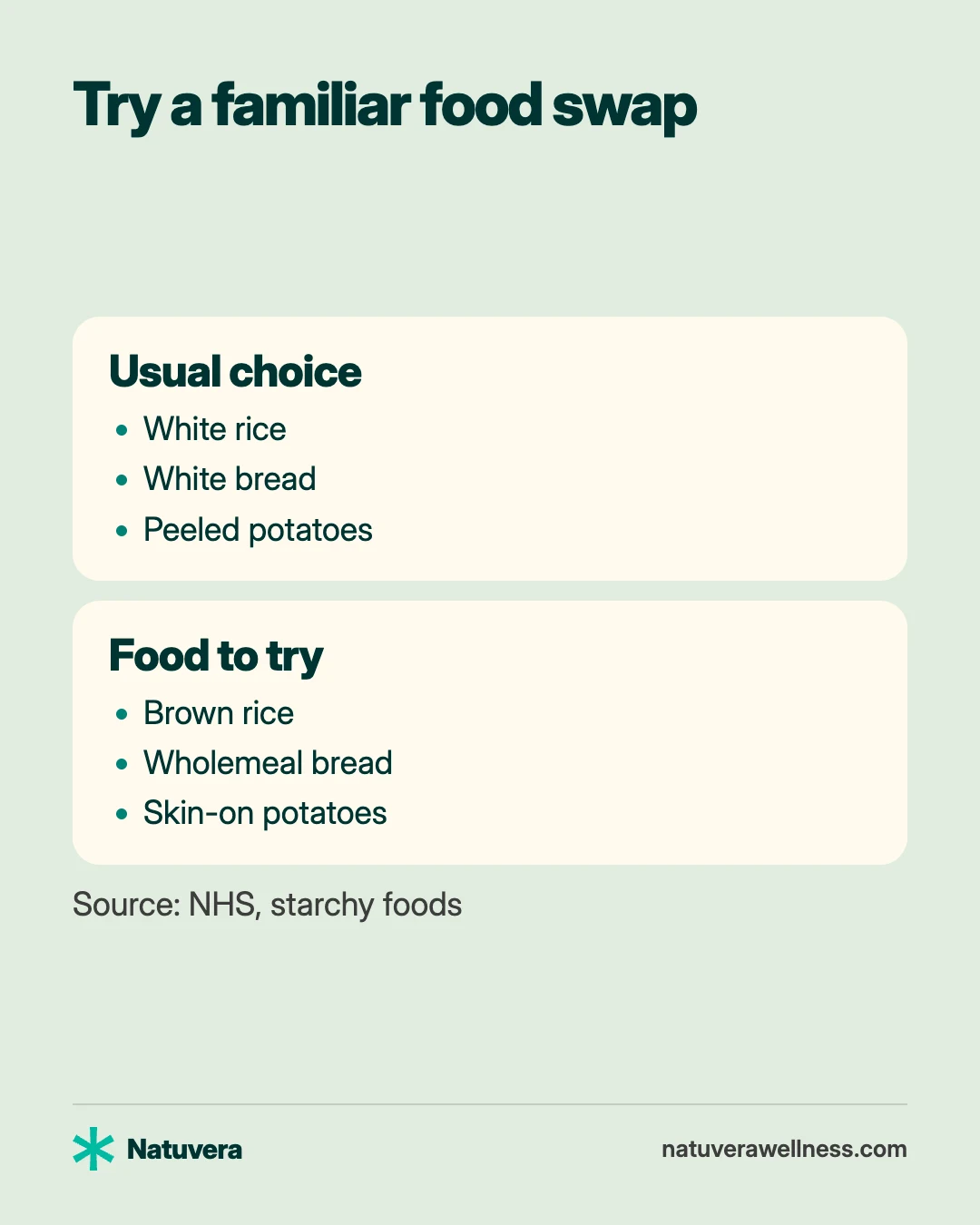
Choose the swap that needs the least extra work in your kitchen. If toast is your usual breakfast, try a different loaf before buying unfamiliar grains. If you cook rice with a regular evening meal, compare the cooking instructions when choosing a wholegrain version. Keep the rest of the meal familiar while deciding whether you like the change.
The British Nutrition Foundation's food-swap sheet also pairs a whole orange with wholemeal toast, adds strawberries and almonds to plain yoghurt, and adds lentils to a tomato-based pasta sauce. These are examples to adapt, rather than a set menu you must follow. 4
Breakfast and lunch ideas
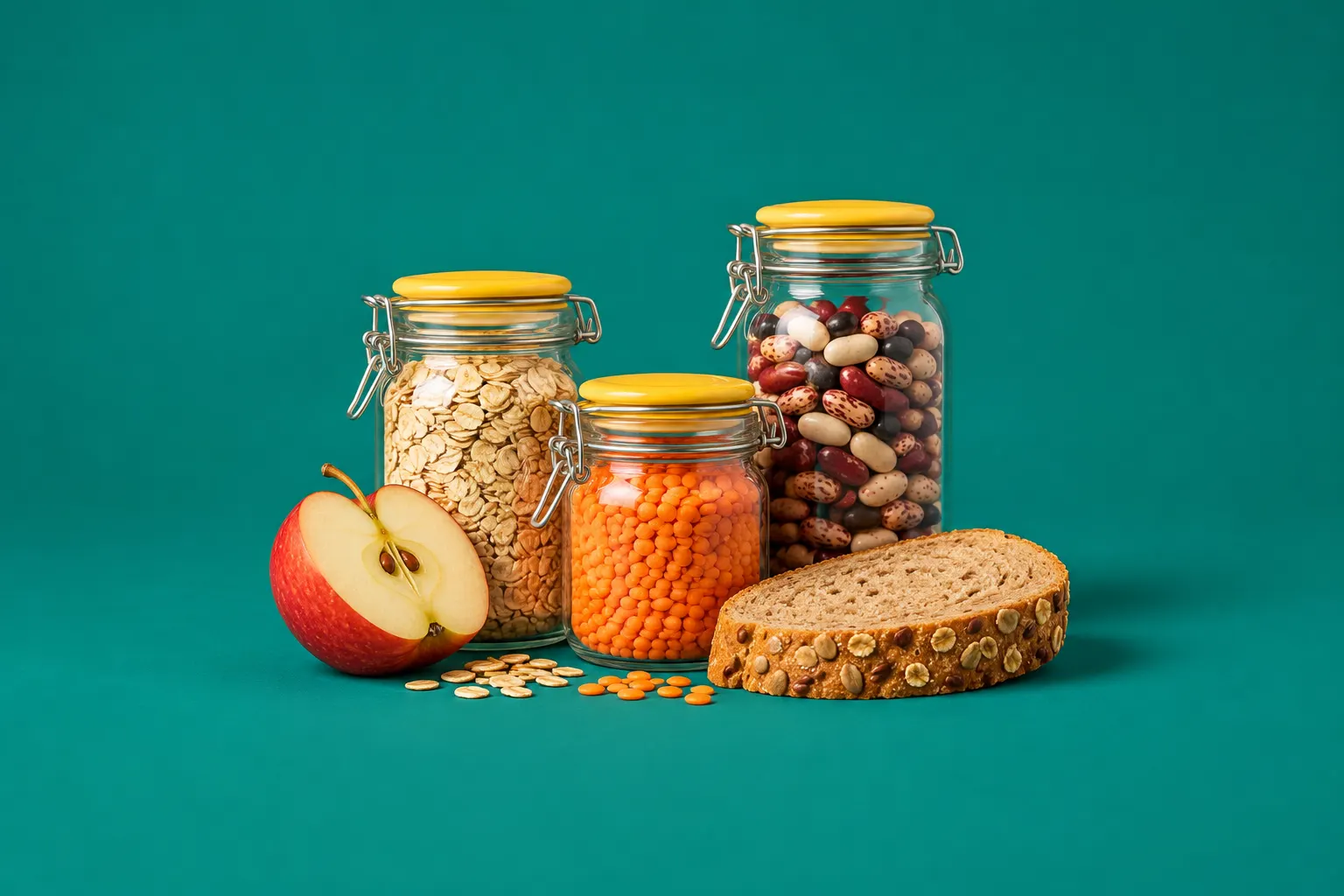
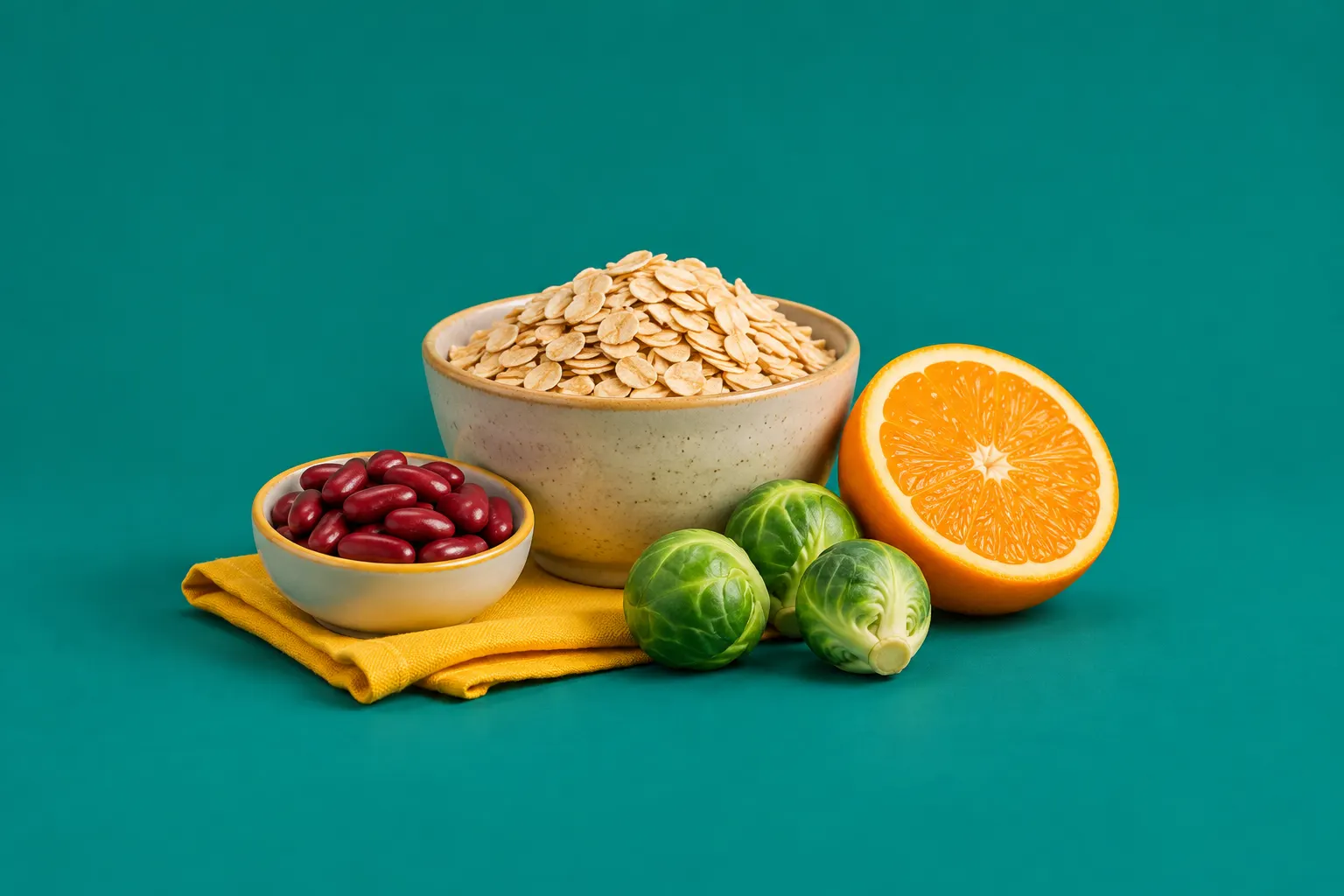
The NHS suggests porridge, plain wholegrain cereals and wholemeal or granary bread as options. It also suggests adding beans, lentils or chickpeas to meals and including vegetables in sauces or alongside a dish. 1
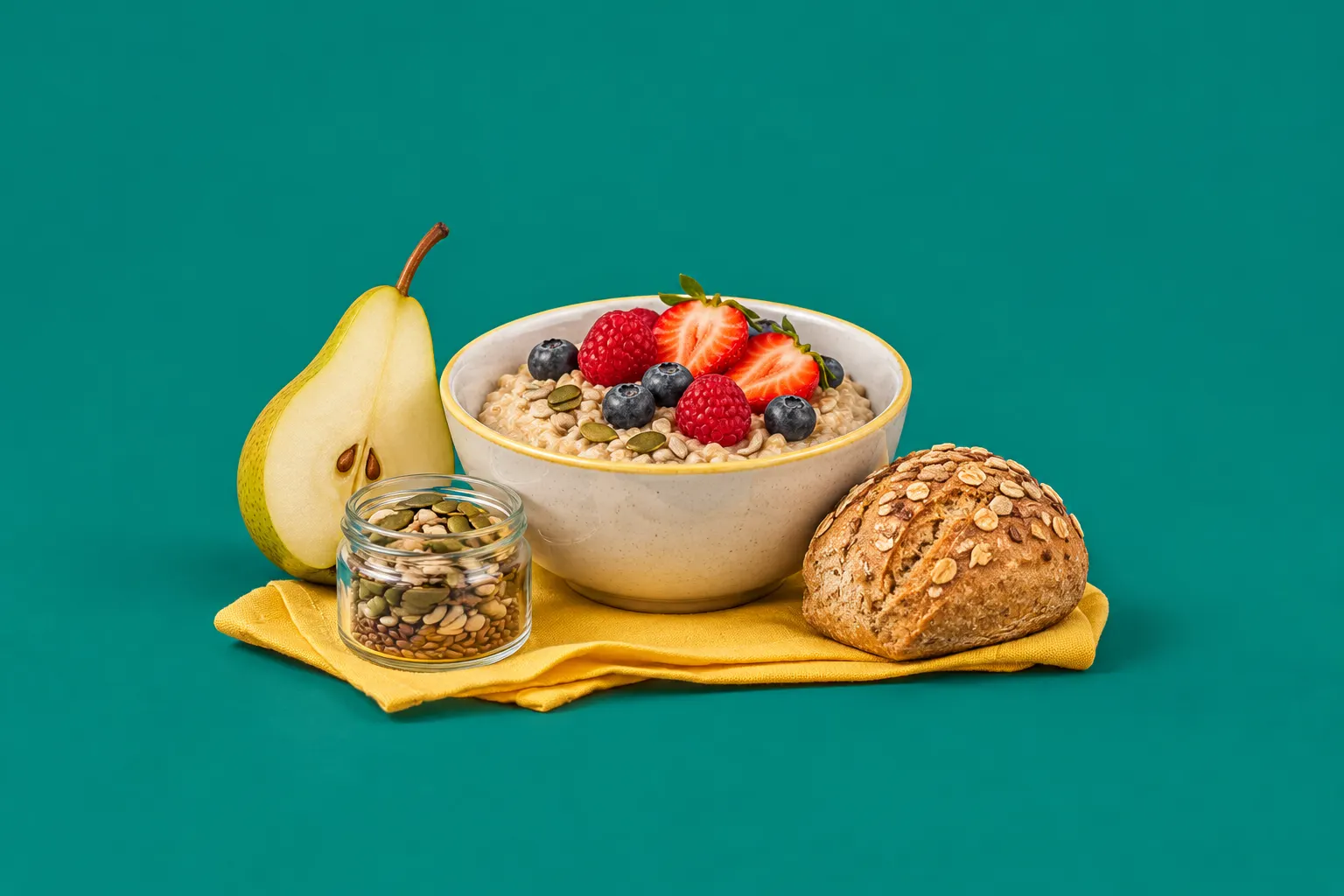
For breakfast, try porridge with fruit you enjoy, or keep your usual toast and change the bread. For lunch, consider a wholemeal sandwich with a vegetable side, or a lentil and tomato pasta dish. These combinations apply the NHS food ideas; they do not have a calculated fibre total here. 1
Evening meals and snacks
Try the British Nutrition Foundation's suggested combination of a skin-on baked potato and vegetables with your main dish. Another example from its swap sheet is rye crackers with houmous. A plain yoghurt with strawberries and almonds is also shown as a snack option. 4
Check the packet's ingredients and allergy information when choosing bread, cereals, crackers or prepared foods. The British Nutrition Foundation explains that allergens are emphasised in ingredients lists and that precautionary statements may also appear. Keep those checks alongside any comparison of fibre content. 5
How much fibre is in an example food?
NHS Fife lists 50 g of porridge oats as providing 4.0 g of fibre. These are separate amounts: 50 g is the food portion listed, while 4.0 g is its fibre content. Do not read a food's weight as if all of it were fibre. 6
For packaged foods, check the fibre row when provided and compare the same column. The British Nutrition Foundation explains that nutrition information is given per 100 g or 100 ml and may also be given per portion. 5
Increase gradually and include drinks
Both the British Nutrition Foundation and NHS Fife advise gradual increases in fibre and enough fluid. A practical way to organise the change is to choose a familiar meal, make a small food swap, then review before adding another change. This sequence is a planning suggestion, not a prescribed timetable. 26
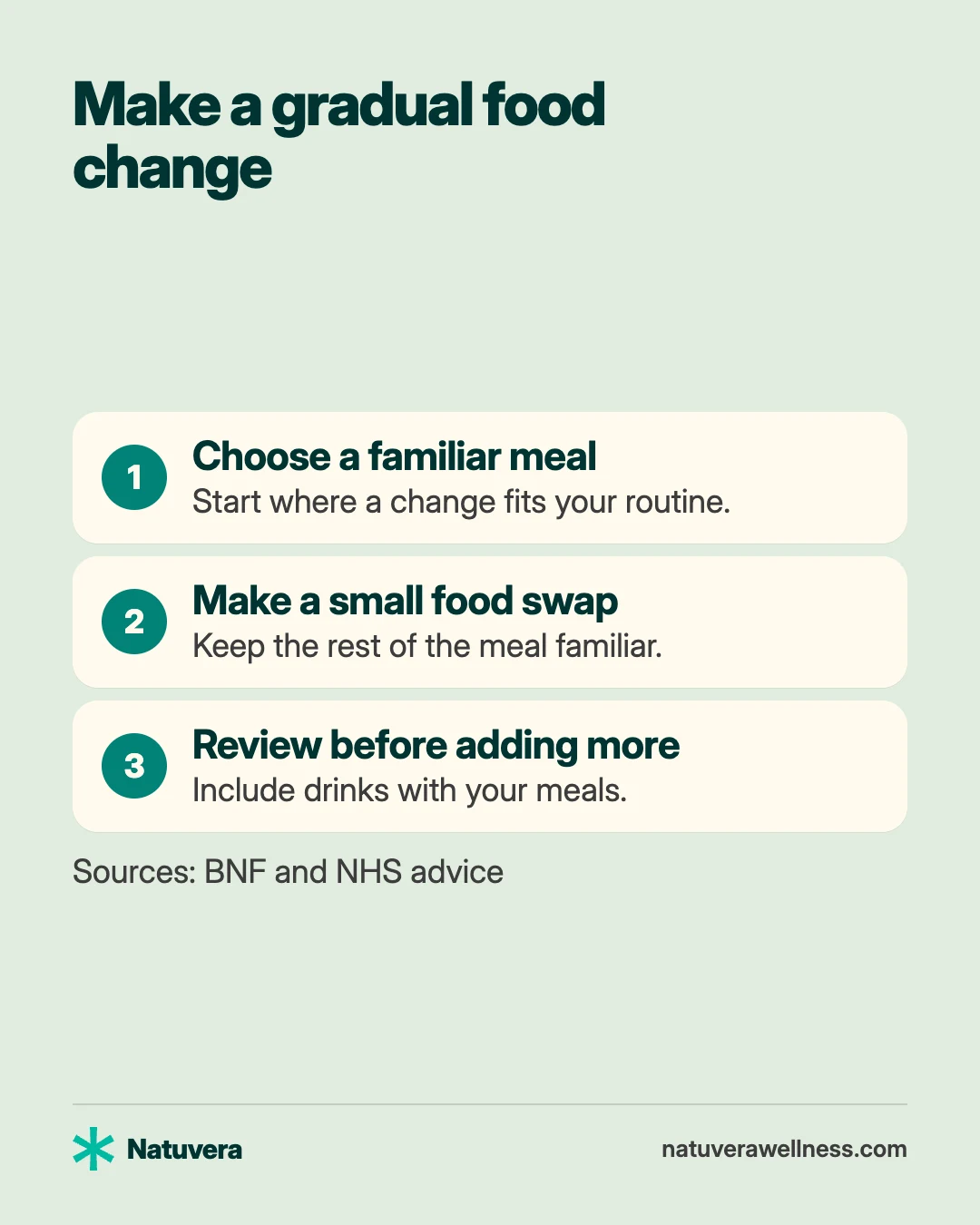
The NHS suggests water with meals as a straightforward reminder to drink. Keep drinks in your meal routine as you make changes. If you have been given a fluid limit or a prescribed diet, speak to your GP or pharmacist before changing those instructions. 7
What if the change leaves you uncomfortable?
The British Nutrition Foundation notes that a rapid increase can cause wind, bloating or discomfort. If you have an existing digestive condition, or symptoms keep recurring, speak to your GP or pharmacist rather than continuing to add foods without advice. 2
For an explanation of the types found in oats, pulses and fruit, read soluble fibre foods. For individual advice during pregnancy or breastfeeding, with a medical condition or while taking medicines, speak to your GP or pharmacist.
Common questions
Which food swaps can increase fibre intake?
NHS suggestions include wholemeal bread, brown rice, wholegrain cereals and skin-on potatoes, with pulses and vegetables in meals.
Should I increase fibre intake all at once?
The British Nutrition Foundation and NHS Fife advise gradual increases and enough fluid. Choose a change that fits a familiar meal.
How much fibre is in porridge oats?
NHS Fife lists 50 g of porridge oats as providing 4.0 g of fibre. Food weight and fibre content are different amounts.
General information about food and health, not medical advice. If you have symptoms or a medical condition, take any medicine or are pregnant, speak to your GP or pharmacist.
References
- NHS. How to get more fibre into your diet. 2026. Read the source (accessed 12 November 2026).
- British Nutrition Foundation. Fibre. n.d. Read the source (accessed 12 November 2026).
- NHS. Starchy foods and carbohydrates. n.d. Read the source (accessed 12 November 2026).
- British Nutrition Foundation. The fun way to fibre. 2021. Read the source (accessed 12 November 2026).
- British Nutrition Foundation. Food labelling. n.d. Read the source (accessed 12 November 2026).
- NHS Fife. Increasing your fibre Intake. n.d. Read the source (accessed 12 November 2026).
- NHS. NHS guidance on food and digestion. 2023. Read the source (accessed 12 November 2026).
- NHS. Bloating. 2026. Read the source (accessed 12 November 2026).