In short
- The pancreas produces amylase, lipase, proteases and other digestive enzymes.
- Pancreatic secretions reach the duodenum through the pancreatic duct.
- Protein-digesting precursors become active through a sequence involving trypsin.
- Possible pancreatic symptoms need clinical assessment rather than self-diagnosis.
In this article
The pancreas produces amylase for starch, lipase for fats and proteases for proteins, including trypsin, chymotrypsin and carboxypeptidases. It releases these digestive secretions through ducts into the small intestine, where much of chemical digestion takes place. 12
The pancreas also makes other enzymes, including elastase and nucleases. Some leave the pancreas as inactive precursors and become active after reaching the intestine. That activation step is especially important for the protein-digesting enzymes. 23
Which enzymes does the pancreas make?
The main families have different targets. Pancreatic amylase acts on starch, lipase on fat and proteases on protein. Thinking about the food component first makes the names easier to understand: these enzymes carry out different chemical reactions during normal digestion. 1
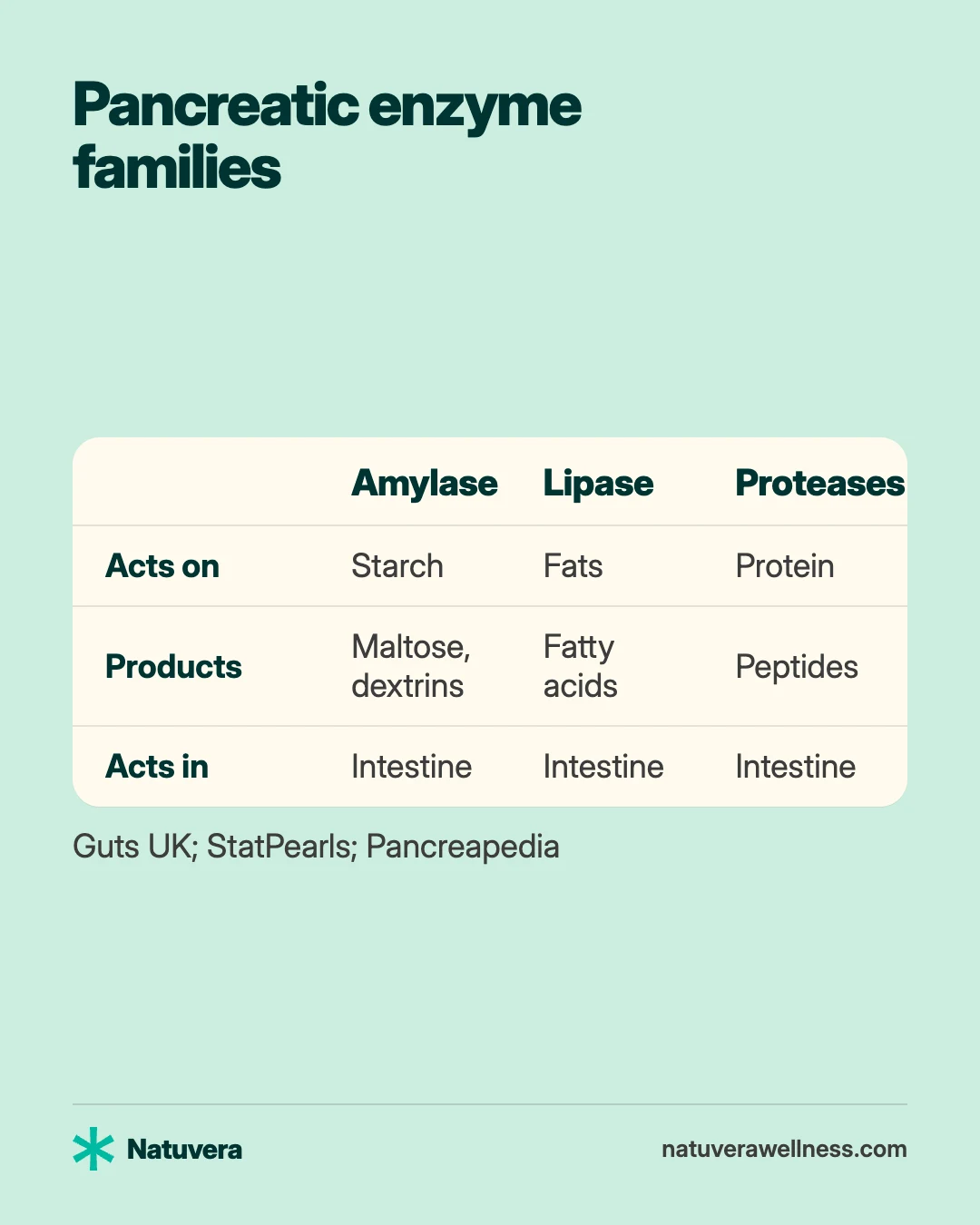
Amylase: starch
Pancreatic amylase breaks starch into smaller carbohydrate fragments, including maltose, maltotriose and dextrins. Enzymes at the intestinal brush border then carry out further breakdown. Amylase is also present in saliva, so starch digestion begins before food reaches the small intestine. 4
Lipase: fats
Pancreatic lipase acts on triglycerides, a major form of fat in food. Its breakdown products include fatty acids and monoacylglycerols. Bile salts disperse fats into droplets as part of this process; bile is made by the liver and is not a pancreatic enzyme. 32
Proteases: proteins
Trypsin and chymotrypsin cut within protein chains. Carboxypeptidases remove amino acids from the ends of chains. Elastase is another pancreatic protease. These names describe a group of enzymes acting on proteins and peptides, rather than interchangeable names for one substance. 2
The pancreas initially packages these enzymes as inactive precursors: trypsinogen, chymotrypsinogen, procarboxypeptidase and proelastase. The corresponding active enzymes act in the small intestine. 2
Other pancreatic enzymes
Pancreatic nucleases break down nucleic acids from food. Ribonuclease acts on RNA and deoxyribonuclease acts on DNA, producing smaller components called nucleotides. These are part of the wider enzyme output, even though patient leaflets usually concentrate on starch, protein and fat. 3
Lactase is different: it is an enzyme of the small intestine's brush border, not a pancreatic enzyme. Sucrase and maltase are also located there. A list of digestive enzymes therefore includes enzymes from several organs, rather than only the pancreas. 3
For the wider explanation, read what digestive enzymes do and where the body makes them.
How are pancreatic enzymes released and activated?
Pancreatic secretions travel through the pancreatic duct to the duodenum. There, the intestinal enzyme enteropeptidase, also called enterokinase, converts trypsinogen into trypsin. Trypsin then activates other pancreatic protease precursors. 12
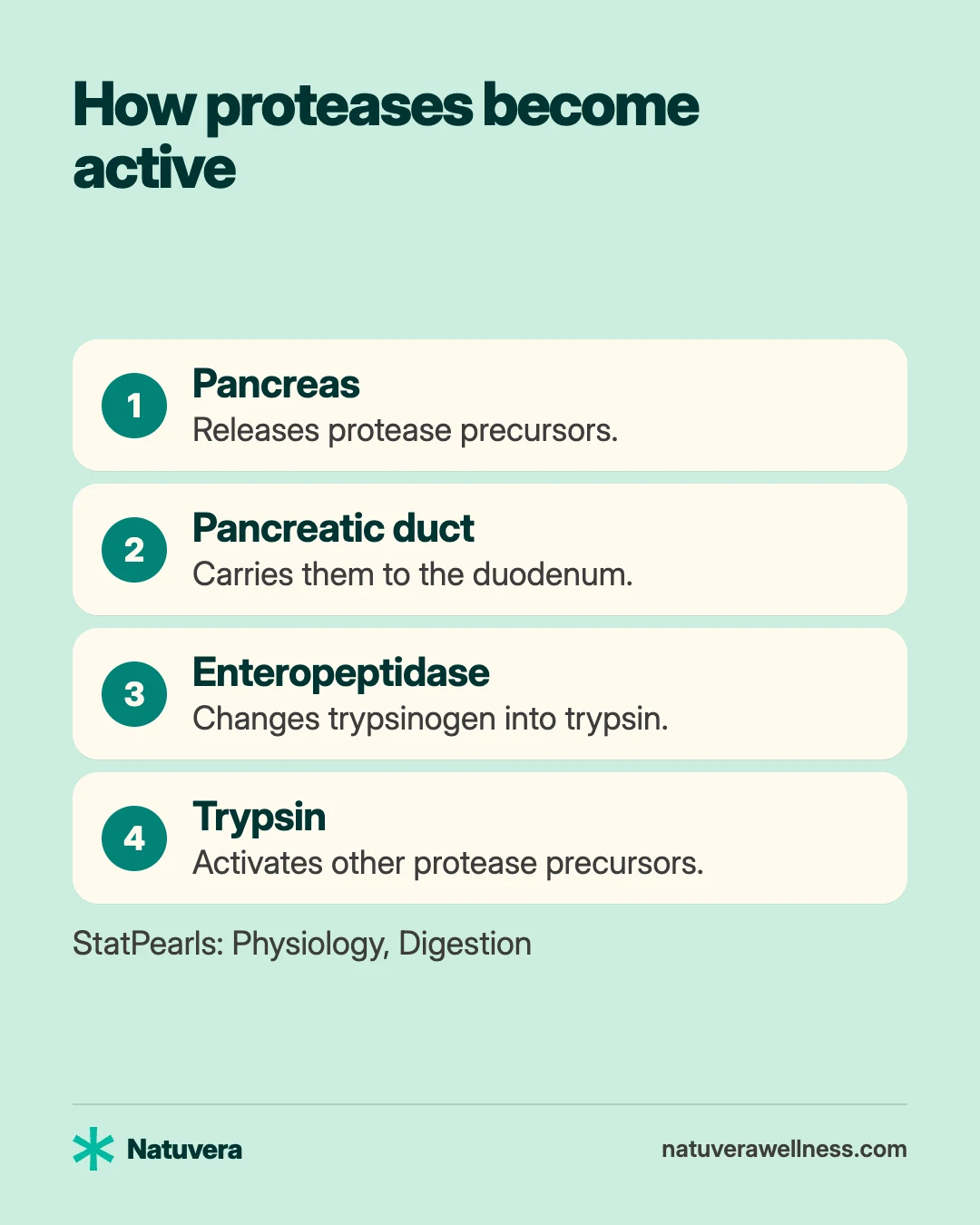
The place where an enzyme is produced is therefore different from the place where it acts. The pancreas lies behind the stomach, but its enzymes enter the small intestine. Food does not pass through the pancreas itself. The duct is the route by which its secretions join food already in the gut. 1
Bicarbonate in pancreatic juice neutralises acid from the stomach. It is a chemical component of the juice, not an enzyme. 1
What if pancreatic enzymes are not reaching the intestine?
Pancreatic exocrine insufficiency means the pancreas does not deliver enough of these enzymes: Guts UK explains that in a damaged pancreas either not enough enzymes are made, or the pancreatic duct is blocked. It is assessed by a clinician rather than from a single symptom at home. 1
Guts UK lists possible signs including fatty, oily poo that can be pale and hard to flush away, and weight loss. These can have other causes, so they need assessment rather than a guess. 1
The NHS also lists upper tummy pain, diarrhoea and unintentional weight loss among symptoms of chronic pancreatitis. It warns that symptoms can resemble other conditions. See a GP if you think you may have chronic pancreatitis. 5
What happens at a GP assessment?
There is no single test for chronic pancreatitis. The NHS says a GP may examine your tummy, arrange blood tests or tests on a poo sample, and refer you for specialist tests when needed. Other possible causes may need to be ruled out. 5
For the appointment, describe what has changed, when it began and whether it follows meals. Bring your medicine and supplement list.
Speak to your GP or pharmacist before considering a food supplement if you already have a pancreatic or bowel condition, take medicines, are pregnant or are breastfeeding. For ingredient specific cautions and the limits of side effect evidence, read digestive enzyme supplements: side effects and who should check first.
Common questions
Does the pancreas produce lactase?
Lactase is a brush border enzyme made at the lining of the small intestine. It is not a pancreatic enzyme.
Where do pancreatic enzymes act?
Pancreatic digestive enzymes enter the duodenum, the first part of the small intestine, through the pancreatic duct.
How is trypsin activated?
The intestinal enzyme enteropeptidase converts trypsinogen into trypsin. Trypsin then activates other pancreatic protease precursors.
General information about food and health, not medical advice. If you have symptoms or a medical condition, take any medicine or are pregnant, speak to your GP or pharmacist.
References
- Guts UK. Pancreatic Exocrine Insufficiency (PEI) and Pancreatic Enzyme Replacement Therapy (PERT). Undated. Read the source (accessed 12 November 2026).
- StatPearls, NCBI Bookshelf. Physiology, Digestion. 2022. Read the source (accessed 12 November 2026).
- OpenStax. Anatomy and Physiology 2e: Chemical Digestion and Absorption: A Closer Look. 2022. Read the source (accessed 12 November 2026).
- Pancreapedia. Amylase. 2019. Read the source (accessed 12 November 2026).
- NHS. Chronic pancreatitis. 2025. Read the source (accessed 12 November 2026).