
In short
- Reported effects depend on the enzyme ingredient and preparation.
- NCCIH says bromelain seems well tolerated by mouth; the most common reported effects are stomach upset and diarrhoea.
- Pregnancy, breastfeeding, medicines and existing conditions need a GP or pharmacist discussion.
- NHS warning signs determine whether to seek routine, urgent or emergency care.
In this article
Side effects reported for digestive enzymes depend on the ingredient. For bromelain, an enzyme from pineapple, NCCIH says it seems to be well tolerated when taken by mouth, and NIH's LiverTox describes side effects as uncommon and usually mild: stomach upset, diarrhoea, nausea and, less often, allergic reactions. 12
Speak to your GP or pharmacist first if you are pregnant, breastfeeding, take medicines, have a pancreatic or bowel condition, or have relevant allergies. Keep the complete ingredient label available: the broad phrase “digestive enzymes” does not identify every substance in a product.
Which side effects have been reported?
NCCIH lists stomach upset and diarrhoea as the most commonly reported adverse effects of oral bromelain. NIH's LiverTox review also describes abdominal discomfort, nausea, hives and rash, with rare reports of anaphylaxis. 12
In a 2026 trial of a different enzyme mixture, three of the 30 adults reported events the researchers considered potentially related, including abdominal discomfort and diarrhoea. 3
If a new supplement disagrees with you, stop taking it and show a pharmacist the label. For signs of a serious allergic reaction, follow the emergency guidance below. 2
Why does the enzyme source matter?
Enzyme preparations can come from plants, microorganisms or animal sources. Bromelain comes from pineapple. A review describes fungal sources for some enzymes and animal sources for others. The origin is relevant information to take to a pharmacist or allergy clinician when assessing a particular label. 41
Papain comes from papaya. In a 2026 assessment of a papain preparation used in food manufacturing, EFSA found no safety concern under its intended uses, while noting that papain is a known food allergen, so allergic reactions could not be excluded. 5
A 2016 case report, described by its authors as the first of its kind, records anaphylaxis after an oral lactase tablet. Earlier reports involved lactase made using Aspergillus, a fungus. 6
Avoid assuming that a plant, fungal or animal origin makes a supplement suitable for a particular allergy. If you have a known pineapple or papaya allergy, or a history of reactions to enzyme preparations, check the proposed ingredients before use. For fungal or animal derived ingredients, ask the manufacturer to clarify the source if the label is incomplete.
Who should speak to a GP or pharmacist first?
Pregnancy, breastfeeding, medicines, existing pancreatic or bowel conditions and relevant allergies are reasons to check before starting. For bromelain specifically, NCCIH says little is known about safety during pregnancy or breastfeeding, and advises anyone taking medicines to discuss possible interactions with a healthcare professional. 1
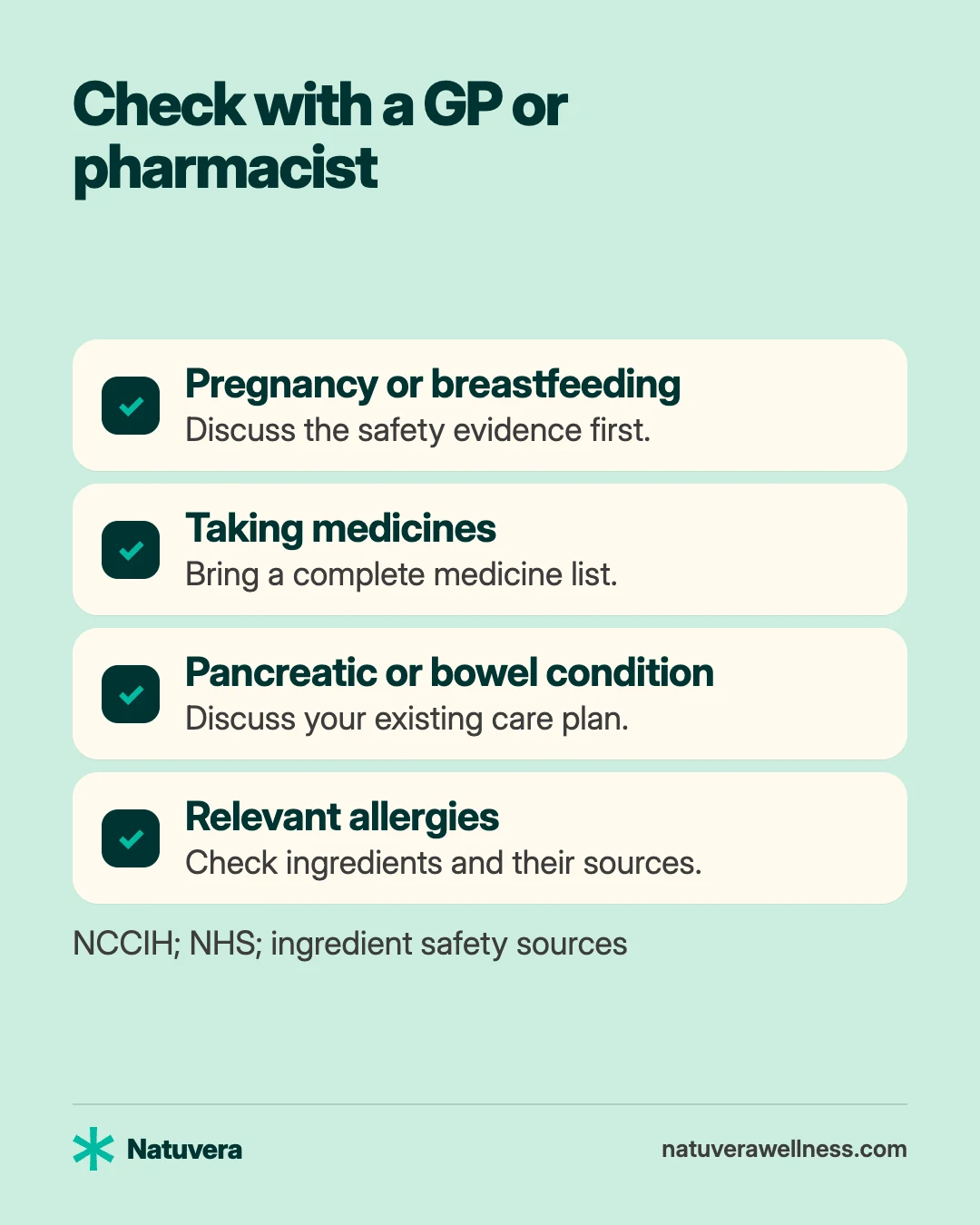
If you are pregnant or breastfeeding: speak to your GP or pharmacist first. NCCIH notes that little is known about bromelain in pregnancy or breastfeeding. 1
If you take medicines: include prescribed medicines, pharmacy medicines and other supplements in the discussion. NCCIH's advice applies to any medicine when considering bromelain. A pharmacist needs the actual ingredient list, rather than just the category name, to check the proposed combination. 1
If you have a pancreatic or bowel condition: discuss new supplements with your GP or pharmacist and keep your established clinical plan under review with your own team. Persistent symptoms should be assessed. The NHS notes that chronic pancreatitis symptoms can overlap with those of other conditions. 7
If you have had an allergic reaction: tell the clinician which preparation was involved and what happened. Keep its packaging or a photograph of the label. Do not test the same preparation again yourself after a suspected serious reaction. 6
When should you get medical help?
The level of urgency depends on the symptoms. NHS guidance treats sudden mouth or throat swelling and breathing difficulty as possible signs of anaphylaxis. Its bloating guidance also distinguishes symptoms needing a GP from those requiring urgent or emergency care. 89
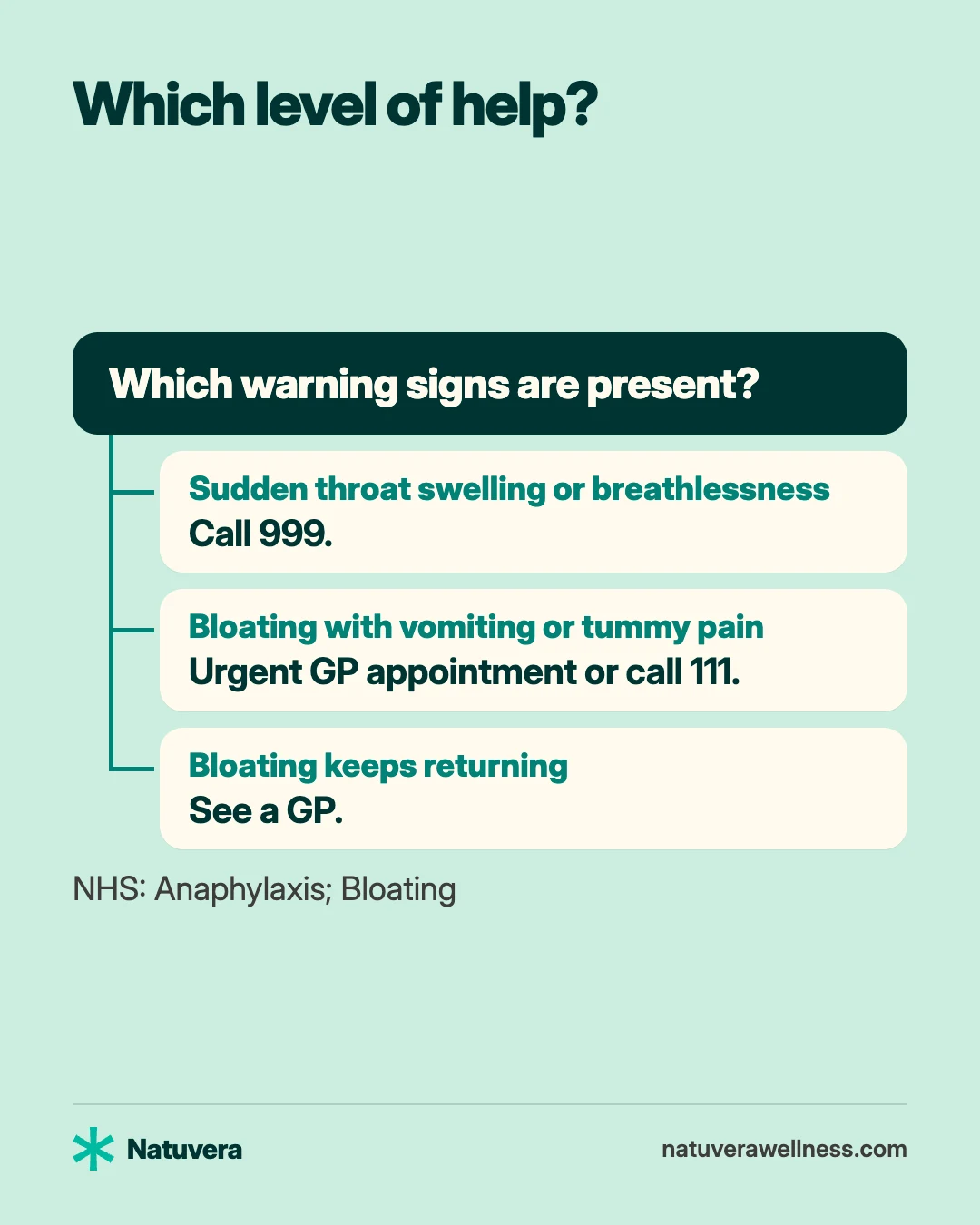
At a routine appointment, a short record of symptoms, start dates and the complete label can make the discussion more specific.
For the underlying physiology, read what digestive enzymes do. For the pancreas's own enzymes and NHS advice about possible pancreatic symptoms, read what digestive enzymes the pancreas produces.
Common questions
Can digestive enzyme supplements cause diarrhoea?
Diarrhoea is among the most commonly reported effects of oral bromelain, and was among the events researchers considered potentially related in a small 2026 trial of an enzyme mixture.
Can someone be allergic to an enzyme supplement?
Yes, though reports are uncommon. Allergic reactions have been reported with bromelain and with an oral lactase preparation, and EFSA notes that papain is a known food allergen. The exact source of the enzyme matters.
Should I check first during pregnancy or breastfeeding?
Speak to your GP or pharmacist before starting. NCCIH specifically notes that little is known about bromelain safety during pregnancy or breastfeeding.
General information about food and health, not medical advice. If you have symptoms or a medical condition, take any medicine or are pregnant, speak to your GP or pharmacist.
References
- National Center for Complementary and Integrative Health. Bromelain: Usefulness and Safety. Undated. Read the source (accessed 12 November 2026).
- LiverTox, National Institute of Diabetes and Digestive and Kidney Diseases. Bromelain. 2024. Read the source (accessed 12 November 2026).
- The Journal of Nutrition. Oral Multienzyme Supplementation Alters Postprandial Plasma Nutrient Concentrations after a Mixed Meal in Healthy Middle-Aged and Older Adults: A Randomized, Double-Blind, Placebo-Controlled, Crossover Trial. 2026. Read the source (accessed 12 November 2026).
- Current Drug Metabolism. Digestive Enzyme Supplementation in Gastrointestinal Diseases. 2016. Read the source (accessed 12 November 2026).
- EFSA Journal. Safety evaluation of the food enzyme papain, a cysteine endopeptidase complex from the latex of Carica papaya L. 2026. Read the source (accessed 12 November 2026).
- Allergy, Asthma & Clinical Immunology. Anaphylaxis to supplemental oral lactase enzyme. 2016. Read the source (accessed 12 November 2026).
- NHS. Chronic pancreatitis. 2025. Read the source (accessed 12 November 2026).
- NHS. Anaphylaxis. Undated. Read the source (accessed 12 November 2026).
- NHS. Bloating. 2026. Read the source (accessed 12 November 2026).